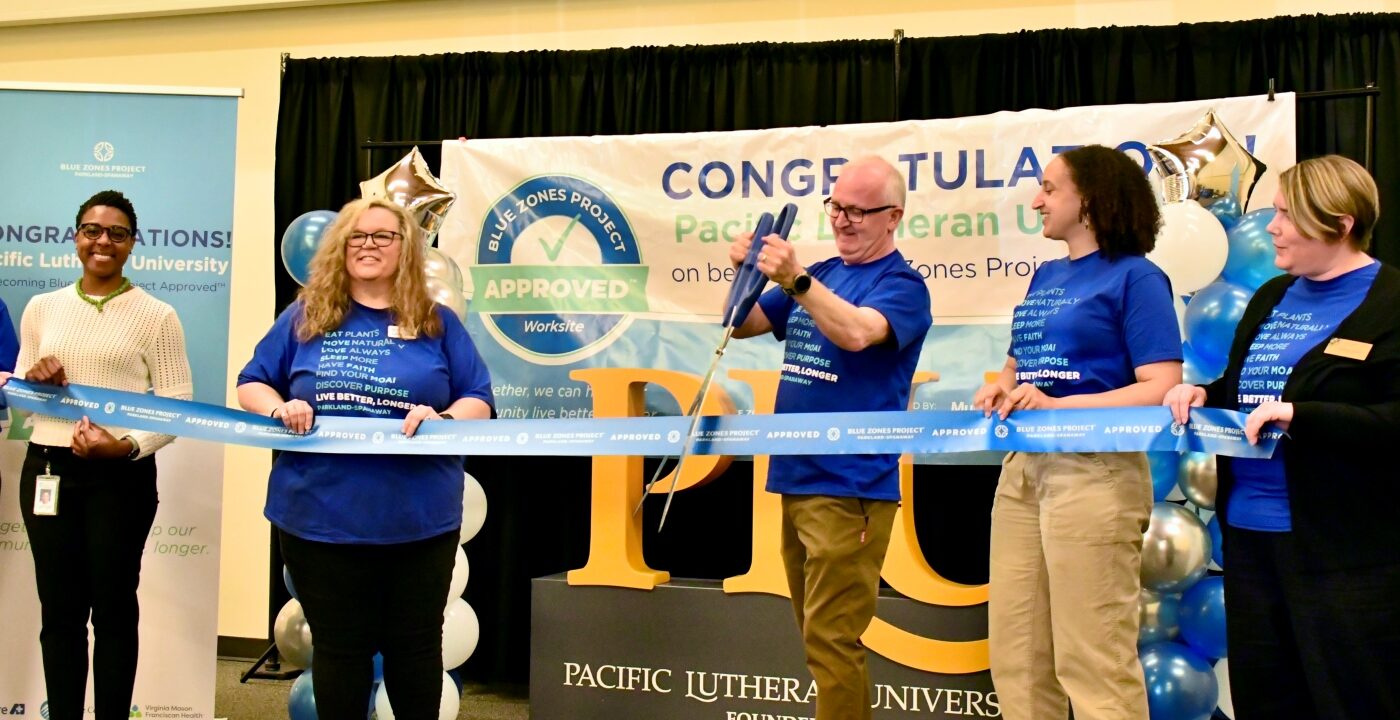
PLU achieves Blue Zones Project designation
At a glance
- PLU becomes the first Blue Zones Project Approved Worksite in Pierce County
- Blue Zones Project implements evidence-based solutions based on the world’s longest-living populations
- Access to more healthy options on campus will help to inspire shift in community habits
The average person will spend roughly one-third of their life at work, which means ignoring healthy habits during work hours could be detrimental to lifelong well-being.
The staff and students at Pacific Lutheran University (PLU) in Parkland are tackling that challenge head-on in partnership with Blue Zones Project, an organization that develops evidence-based solutions to help people live better and longer lives.
Its programs are inspired by the world’s longest-living and happiest populations, commonly known as blue zones. Blue Zones Project transforms these cultures into simple practices anyone could adopt.
MultiCare, in partnership with Virginia Mason Franciscan Health and Pierce County leaders, is a sponsor of Blue Zones Project and its efforts to build stronger, more equitable communities in Pierce County.
“It’s all about working with local communities to improve their health habits,” says Mary Fabrizio, AVP for the MultiCare Center for Health Equity and Wellness. “By improving policy and making environmental changes like improving access to safe, walkable areas or tobacco cessation policies, we can improve health in the places where people live, work and play.”
How Blue Zones is improving life at PLU
As the first Blue Zones Project Approved Worksite in Pierce County, PLU staff and faculty will have the opportunity to incorporate new and creative healthy habits into their daily schedules, both on campus and at home.
“We want to make the healthy choice the easy choice. For example, clearly identifying what options are beneficial and healthy for people in the dining halls, so you know that you’ve chosen something to help fuel your work or studies,” explains Joseph Gomez, marketing and engagement lead with Blue Zones Project Parkland-Spanaway. “We start with the belief that when those choices are convenient, people are more likely to choose them.”
“PLU staff were already good at developing their own healthy habits, so we’ve seen great participation from the start and are now focusing on promoting movement throughout the workday,” says Queena Tupou, executive director with Blue Zones Project Parkland-Spanaway.
That could be choosing to park on the far end of campus in designated Blue Zones Project parking spots to get extra steps — or attending a yoga class after work.
In addition to physical activity, PLU staff have stepped up within their areas of expertise to support the initiative. A professor who line dances is starting a class, and another taught a Spanish-language nutrition-based cooking class to show how cooking healthy doesn’t have to be hard.
“PLU has been a part of this community for so long … and as a center for education, we know that community health starts with being educated about it,” says Shalita Myrick, chief operating officer and vice president for PLU Administrative Services. “That’s why it was so important to start this program here where a lot of our students and staff members live in this community, too.”
The ZIP code effect
Part of Blue Zones Project’s mission is to tackle the “ZIP code effect,” which highlights how a person’s neighborhood, rather than genetics, has a bigger influence on their health and well-being.
“People spend so much time in the ZIP code they live and work in,” says Fabrizio. “With worksite wellness programs and initiatives like this at PLU, it’s giving people the opportunity to make the healthier choice, and as one of the biggest employers in the Parkland/Spanaway community, it will have widespread impact.”
Parkland and Spanaway are located in an unincorporated area of Pierce County and lack important health resources, explains Gomez. PLU, a landmark institution in the area that offers excellent health care education programs, can support current staff and students as a Blue Zones Project Approved Worksite — and instill those habits into the next generation of caregivers, too.
There are many opportunities for PLU students to use what they’re learning in school and from the Blue Zones Project to apply to their future careers, adds Blue Zones’ Tupou.
“By embracing Blue Zones’ evidence-based strategies, we aspire to cultivate a campus and surrounding community where healthy habits are integrated into daily life, promoting greater physical, mental and social flourishing for our students, faculty, staff and neighbors,” says PLU COO Myrick. “We believe this collaboration will not only enhance the long-term health and vitality of our PLU family but also serve as a model for building a healthier, more resilient future for the broader Parkland/Spanaway community.”
What's next
- See how else MultiCare is supporting access and healthy lifestyles
- Get involved in your health with one of our many programs or events
- Our community partners are doing great work — read their stories