Tacoma mom grateful for donor-supported recovery
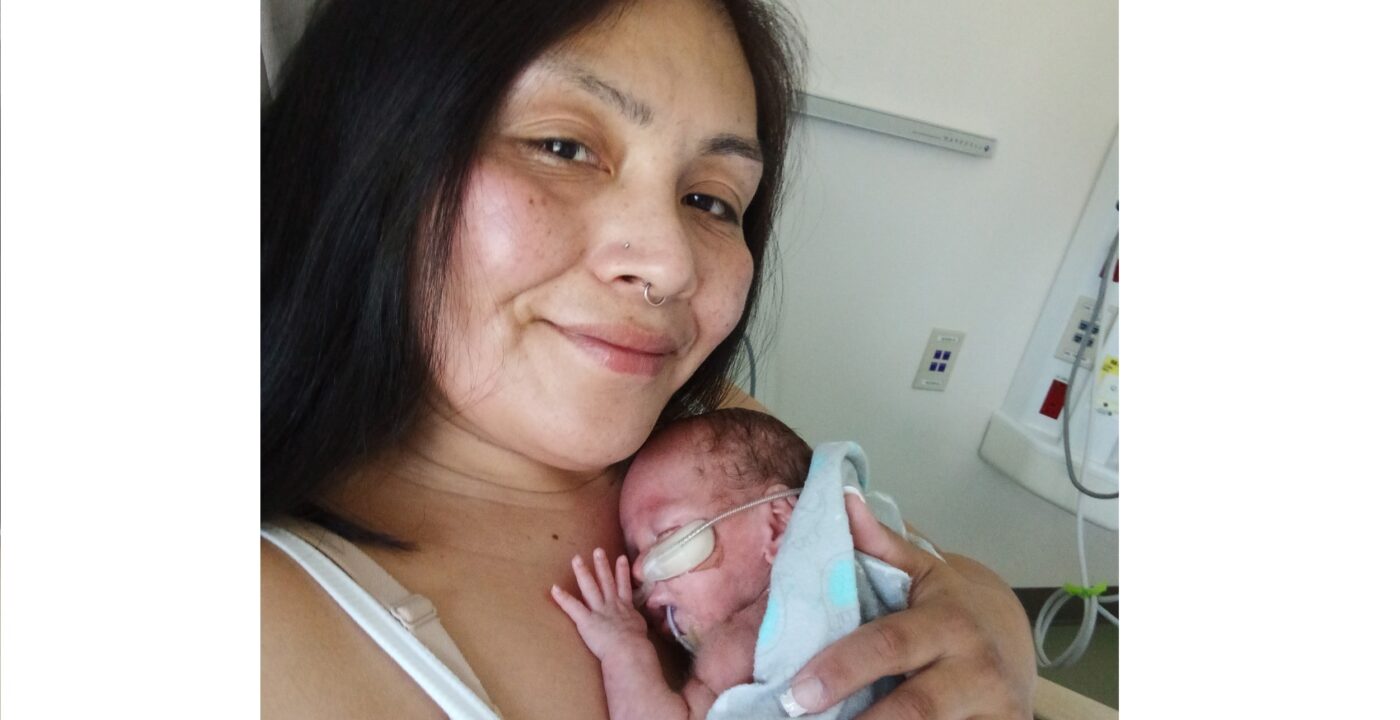
Ashley Schuster credits one phone call with saving her life.
In November 2024, she discovered she was 19 weeks pregnant — a fact she hadn’t realized until then due to her opioid usage. Quitting on her own wasn’t taking, and Schuster knew she needed help.
“I told myself, ‘Finding a program will give me the start I need to push myself to quit,’” she says.
Schuster began contacting nearby treatment centers, but no one had the space for an immediate enrollment.
On a whim, she called the donor-supported Substance Treatment and Recovery Training (START) inpatient unit at MultiCare Good Samaritan Hospital, just 20 minutes away from her home in Tacoma. Someone picked up after one ring.
“They said they had beds available … and if I wanted to, I could begin that same day,” Schuster remembers. “I said, ‘Give me two hours, and I’ll be there.’”
Offering a lifeline
Since 2022, START has served pregnant and postpartum patients seeking to address their substance use disorder. The unit offers prenatal care, medical detoxification and stabilization, chemical dependency treatment, social support, counseling and aftercare coordination, all with a nonjudgmental, patient-centered approach.
MultiCare Good Samaritan Foundation donors play a critical role in ensuring that expecting parents can access comprehensive care specifically tailored to their needs. Donated funds also go toward providing on-unit activities and wraparound resources.
The program is one of only a few in Washington state.
“A lot of our patients experience stigma around their substance use, which impacts their access to prenatal care and can make them afraid because they know there’s a good chance they’ll be judged in the health care system for their use,” explains Mary Buswell, MD, addiction medicine fellow. “That puts them in a dangerous place, where they’re actually not getting the prenatal care they need.
“We see time and time again people who are working so hard in treatment are amazing parents,” she continues.
Recovery done right
On Nov. 8, 2024, Schuster was admitted for a 26-day inpatient stay.
“Every time before I’ve gone to treatment, it was forced on me,” she says. “I knew if I didn’t do it my own way, then it probably wasn’t going to last … I was super determined to get it right this time.” 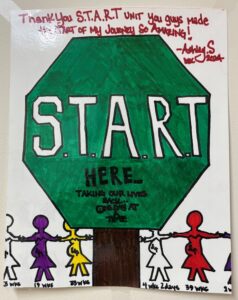
Schuster was met by numerous attentive, compassionate providers who walked hand-in-hand with her through each step of the program, from medications to mental health support. Nurses like Jenilee Thiederman and counselors like Kathi Wire made a quick and lasting impression.
“You feel like you’ve known everyone for years because of how amazing they are and how close you get with them so fast,” Schuster shares. “They definitely care about you, and I think that’s what makes the biggest difference when it comes to being on the patient side of it.”
In addition to her own recovery, she began taking on a big-sister role with other patients.
“Ashley was very focused on her own treatment, but she also was always really engaged in supporting other people in the program,” Dr. Buswell reflects. “She was very beloved by our nursing team and our counselors because of the way she brought other people in.”
An unexpected transition
Schuster completed her START stay on Dec. 5, then reunited with her aunt and 7-year-old son Cameron. She expected to enroll in follow-up residential treatment for the remainder of her pregnancy, but a routine ultrasound changed those plans. 
Doctors told Schuster she was at severe risk for a preterm delivery — more than three months before her due date.
“It was a big shock,” she says. “The next thing I know, I’m being told I need to go to (MultiCare Tacoma General Hospital) immediately.”
With little time to process this new reality, she called her START family, where she’d continued to receive weekly outpatient care. Dr. Buswell calmly walked Schuster through what to expect and helped settle her nerves about temporarily transitioning care away from Good Samaritan.
“I think those bonds that she made during treatment have been so supportive afterward for her to be able to continue to reach out and lean on her support team to help when things get really hard,” Dr. Buswell shares.
On Jan. 21, Schuster gave birth to her son Jaxson, who weighed less than 2 pounds and was admitted to MultiCare Mary Bridge Children’s Hospital’s neonatal intensive care unit. She’s a regular visitor as Jaxson continues to grow, thanks to expert, around-the-clock care.
“Everyone there is pretty stinking amazing,” Schuster says. “The nurses are so awesome, and he’s making such good progress.”
Grateful for compassionate care
Schuster knows the value of having unwavering support in recovery. 
“When you’re doing it on your own and not having help … it’s a lot, lot harder,” she shares. “If I didn’t find the START program, I honestly don’t know if I would have made it through any of this.”
Schuster was recently approved for housing assistance to help move into her own place. In March, she attended a field trip with her Cameron’s class to the Tacoma Nature Center.
“Being able to be there for him … and make him happy and fill his cup, it definitely fills mine,” Schuster reflects. “It’s definitely taken a lot of work to finally get to where I’m at right now, but it’s so worth it.”
Inspired by her patient’s strength and resilient spirit, Dr. Buswell is thankful to live in a community that generously gives back to critical health care programs like START.
“Without that support, we wouldn’t be able to offer the amazing program that we have,” she explains. “Investment in programs like this is so important, because it’s serving and providing for some of the most vulnerable and marginalized populations in our community.”
Since the day she first called the inpatient unit, Schuster’s gratitude has grown exponentially.
“I can’t express enough how amazing everybody at the START program is, from the beginning of my time to the very end and afterwards,” she shares. “When I say they saved my life, they really did.”