Bridges founder’s goal is that ‘no child grieves alone’
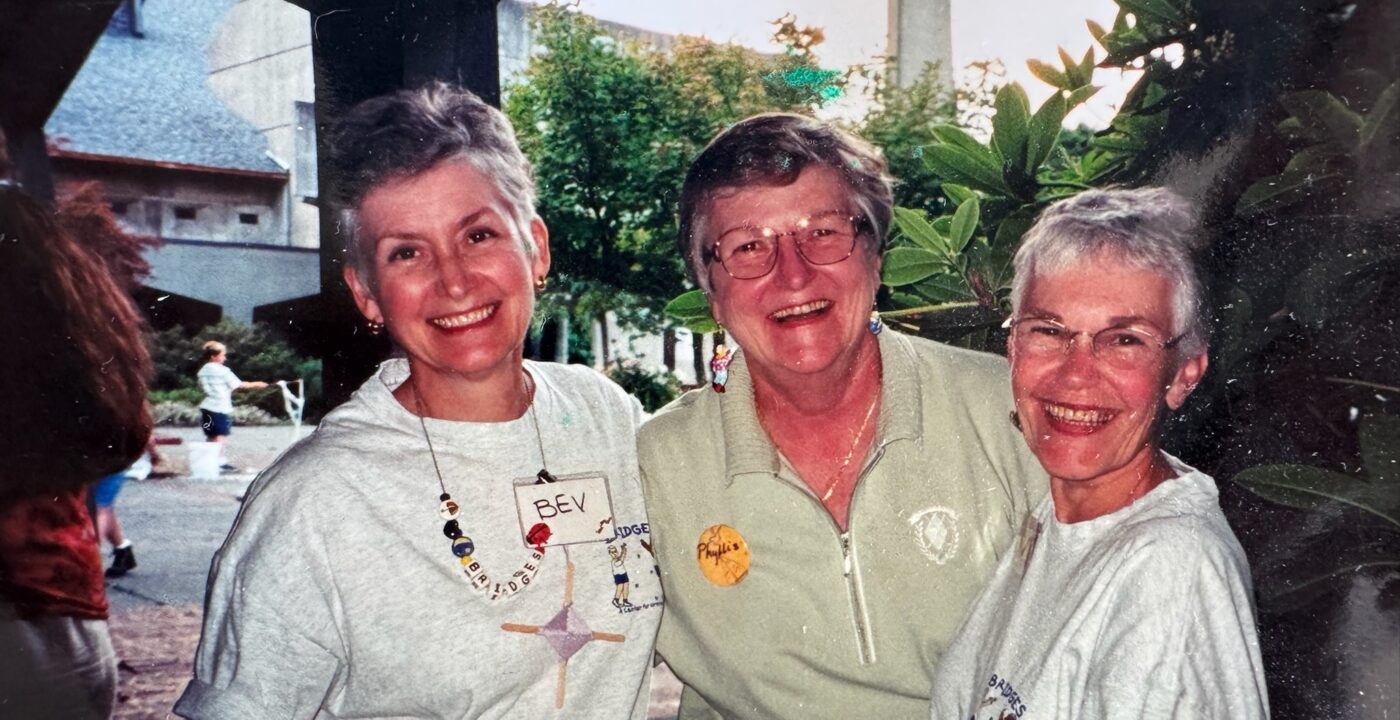
It’s July in the late ’70s, and Beverly “Bev” Hatter is sitting down to a picnic with her 4-year-old daughter, 15-month-old son and some friends.
A phone rings, and the call will change their lives forever — Hatter’s husband Paul had collapsed and died while hiking in the Olympics.
The tragic event would go on to inspire her exploration of and future career in grief work.
The birth of Bridges Center for Grieving Children
Hatter, a clinical social worker by training, began her grief journey by attending a group-based program for people who’d lost a spouse. Later, she was asked to facilitate this group. She then transitioned to teaching grief and loss classes at Tacoma Community College (TCC).
In the mid-1980s, Hatter joined Hospice of Tacoma shortly after it was added to MultiCare’s continuum of care. United Way had also awarded the hospice program a $5,000 grant to better understand children in grief.
As Hatter researched programs across the county, Good Morning America coincidentally featured The Dougy Center, a group/family-based grief model in Portland, Oregon.
Impressed, she reached out, received training and, after nine months of planning and creating, founded Bridges Center for Grieving Children in Tacoma — the third children’s bereavement program based on the Dougy Center model to open in the U.S.
Over time, the program’s curriculum has evolved, guided by the tasks of grief, needs expressed by participating families and ongoing research in the field of grief.
“The Bridges’ mission remains the same — that no child grieve alone,” Hatter explains. “Because children did grieve alone. Their story would be lonely, as no one really explained what was happening. They didn’t even know Mommy was that sick. They didn’t even know what death was to begin with.
“We didn’t know how to explain to them or how to understand their responses,” she continues. “There’s lots of information needed, so many questions and no one really to answer them. They feel so alone. But when the kids would walk into Bridges, they would sit down and they could look eye-to-eye across their group and see that somebody gets it.”
Part of pediatric care
Bridges moved under MultiCare Mary Bridge Children’s Hospital & Health Network in 1999 and has, fittingly, been there ever since.
At every intake appointment, families with children between the ages of 4 and 18 who are grieving the death of a family member receive a packet that details the child’s developmental needs and contains appropriate resources.
In 2024 alone, the Bridges team served 986 individuals and 349 families from Pierce, King, Snohomish, Kitsap and Thurston communities. Over 2,000 individuals participated in bimonthly support groups, which meet for nine months and are designed around Childhood Bereavement Study research conducted at Harvard University.
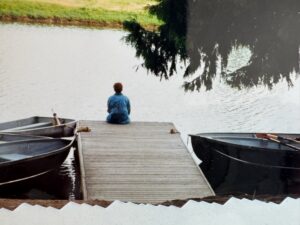
Reflective moment at family camp
In addition to support groups, Bridges offers a weekend-long youth bereavement camp called Camp Erin Tacoma and educational resources for the community, like grief toolkits for adults to use in support of grieving children.
Comforting, pocket-sized fleece hearts known as Feelie Hearts are also available for group participants to take home and carry with them throughout the day.
“In our Littles Group of 4- to 6-year-olds, we had a big, red velvet heart that the children held when it was their turn to share,” Hatter says. “But they didn’t want to give up the big, comforting heart. So, Margie Williams, the Littles Facilitator, went home and made tiny hearts out of velvet and brought them to the group. Each child now had their own bit of comfort to take home.”
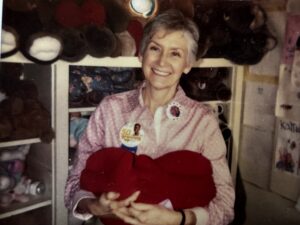
Original heart used in the Littles Group, held by Bev Hatter
Bridges is powered by volunteers like Williams and by donors through Mary Bridge Children’s Foundation, whose generous donations help ensure services remain free for families.
A legacy continued
While Hatter has since retired from the program, she still gives back as a volunteer, facilitating a monthly support group for parents who have a child with cancer and doing about four to six hours of clerical work each week.
“Volunteering means a lot,” she shares. “It’s a connection to a wonderful, helping community. It’s an important part of my life.
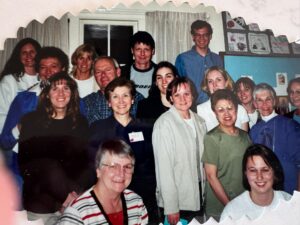
Early Bridges volunteer training
“I love the program,” Hatter continues. “I want to support the staff who are doing a great job and the families who show such courage by sharing and supporting one another at such a difficult point in their lives.”
Joining Hatter are college students, older adults and former support group participants who were personally impacted by Bridges.
“What I find so stirring is when kids come back and volunteer when they grow up,” she says. “The kids coming back and the kids who go on to become doctors or work in the health professions — it’s like they want to make the world safer and better and healthier, and I think that’s what we’re here for.”
Hatter’s Bridges legacy continues with over three decades of generosity as a Mary Bridge Children’s Foundation donor. To her, it’s a no-brainer to champion child- and family-centered bereavement services.
“I look, and I think, ‘How can a city not have this program?’” she says. “Grief is obviously a lifelong task that we live with, we adjust to.
“Kids grieve at different developmental stages, too — how I’m living and understanding the loss of my mother when I’m 4 is very different than how I do it at 9,” she continues. “And we’re planting those seeds to understand and heal.”