Delaying Type 1 diabetes in kids
At a glance
- Type 1 diabetes can be challenging to manage in young children
- A clinical trial testing the drug teplizumab may help delay onset of this disease
- Slowing the progression may improve kids’ long-term health and quality of life
At first glance, 6-year-old Evelyn Giese and 5-year-old Aguistin (Augie) Carney Fannon might not seem to share many similarities.
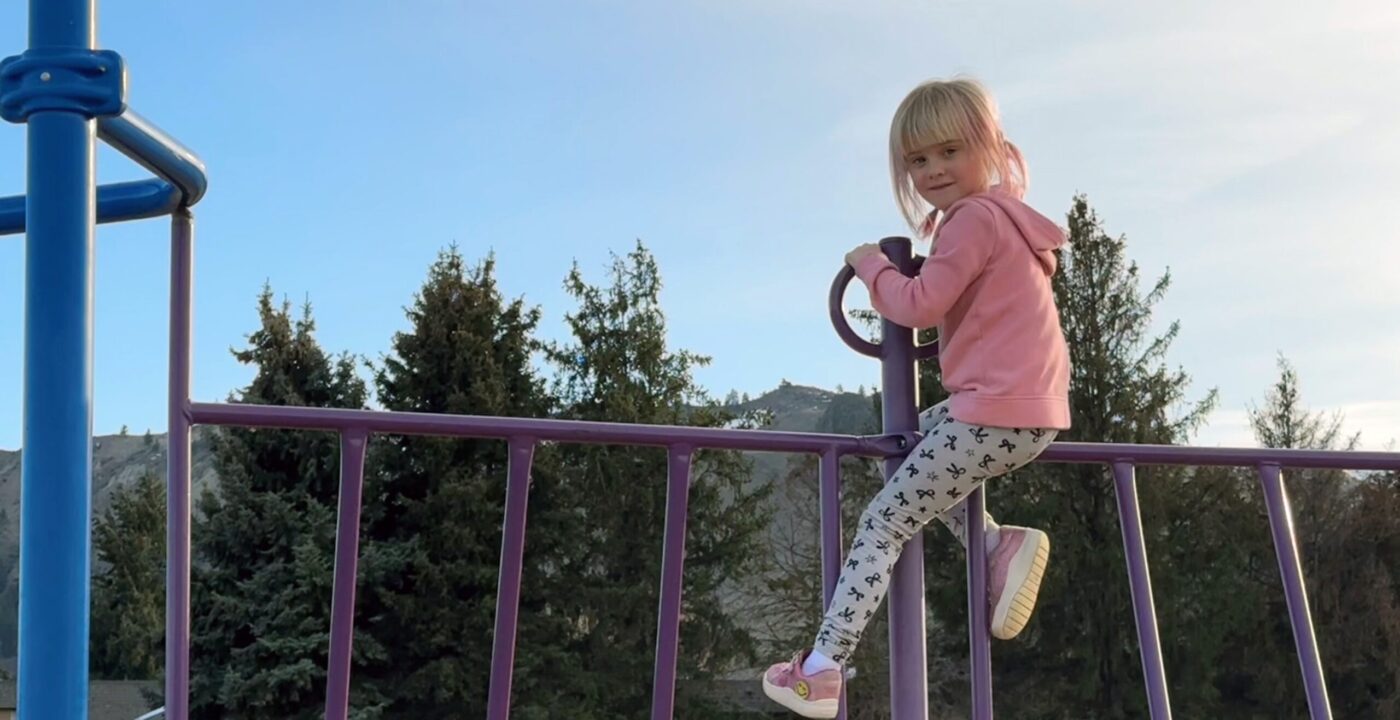
Evelyn is a monkey-bar fanatic who expresses her creativity through imaginative play and arts and crafts. Augie is a master Lego builder who loves to curl up on the couch with a good book.
What these two have in common: preclinical Type 1 diabetes, an early stage of the disease where they do not yet experience symptoms.
Someday that will change for both Augie and Evelyn. But through a clinical trial at MultiCare Mary Bridge Children’s, their families hope to delay the progression of this condition for as long as possible.
“Managing a diagnosis of Type 1 diabetes can be really challenging with younger age groups,” says Bhuvana Sunil, MD, a pediatric endocrinologist at Mary Bridge Children’s and a principal investigator for the trial. “The longer we can delay full onset of this disease, the better quality of life these kids have.”
What are the stages of Type 1 diabetes?
Type 1 diabetes is an autoimmune condition where the immune system mistakenly attacks cells in the pancreas. The damaged cells stop producing insulin — a hormone our body needs to regulate the amount of sugar in our blood.
It’s a condition that occurs in stages, explains Dr. Sunil.
In stage 1, diabetes-related antibodies are present in the blood. (Antibodies are proteins produced by the immune system.) Stage 2 is when the pancreas starts to malfunction. In this stage there are more antibodies in the blood, and blood-sugar levels may be abnormal, but there are still no symptoms.
“Stage 3 is when those classic symptoms of diabetes show up,” Dr. Sunil says. “People may find they’re excessively thirsty, drinking a lot, urinating frequently, feeling tired all the time and losing weight. Stage 3 is considered the official clinical onset of the disease.”
Holding back the onset
There is no cure for Type 1 diabetes. At stage 3, a person will need to take insulin daily in addition to closely monitoring their diet and activity level for the rest of their lives.
Donnelle Giese, Evelyn’s mother, is intimately familiar with the challenges of diabetes management. She’s been living with Type 1 diabetes for over 30 years.
Her son — Evelyn’s twin brother — was diagnosed with diabetes at the age of 2, so it wasn’t a surprise when testing revealed Evelyn, 3 years old at the time, was in stage 1. Within a year, she had progressed to stage 2.
“We were feeling a little anxious about how quickly her condition was progressing,” Donnelle says. “Having a toddler that’s insulin-dependent has been a real learning curve. We wanted Evelyn to be more independent and to be better able to take care of herself before having to bear that burden.”
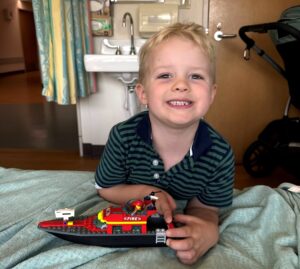
Augie Carney Fannon shows off a Lego set he built during his clinical trial experience.
Like Evelyn, Augie also has a parent with Type 1 diabetes — his father, Don.
“Our story really begins with Don, who was diagnosed at 33,” says Erin Carney Fannon, Augie’s mother. “Don is amazing at managing his condition and it hasn’t slowed him down, but we wanted to give Augie as many years without the full-on diagnosis as we could. When he progressed to stage 2 at only 4 years old, we were ready to jump on any opportunity to slow it down.”
A new drug therapy brings hope
That opportunity, for both Augie and Evelyn, was a phase 4 clinical trial of the drug teplizumab. Mary Bridge Children’s is one of several clinical trial sites across the country testing the drug — and the only one in Washington state.
Approved by the U.S. Food and Drug Administration (FDA) for children 8 and older, teplizumab prevents immune cells from attacking the pancreas, helping preserve the functioning of this organ.
In earlier studies, the drug successfully delayed progression of Type 1 diabetes from stage 2 to stage 3 by two to three years. This trial focuses on kids like Augie and Evelyn, who are under the age of 8.
“Any time you can buy these kids is valuable,” Dr. Sunil says. “People can live well with Type 1 diabetes as long as they maintain tight control, but that level of control is really hard with young kids. They’re not necessarily on a predictable schedule, they tend to be sensitive to insulin and many are picky eaters. Those variables can put them at greater risk for experiencing diabetes-related complications.”
Research shows that kids diagnosed with Type 1 diabetes — who reach stage 3 — before the age of 10 have a higher risk of cardiovascular complications and reduced life expectancy compared to those who are diagnosed later in life.
What causes Type 1 diabetes?
“We don’t know exactly what triggers Type 1 diabetes. Genetics, or family history, plays a role. Sometimes viral infections can also push someone into stage 3 of this disease.”
Fighting diabetes with courage and creativity
As part of the study, Evelyn and Augie received intravenous infusions of teplizumab for 14 days. The infusions did not require an inpatient hospital stay, but study participants had to visit Mary Bridge Children’s Hospital daily. The process could take up to a few hours, including the preparation and post-infusion observation period.
But for both children, participation in the study was about more than just sitting for an infusion. During this experience, Augie achieved an important milestone — building not only his first Lego set but 14, completing one each day of the study.
“Every day we’d check in and then build Legos together while he got his infusions,” Erin says. “Our whole experience was a testament to the research team — they made it all seamless and the environment was so kid-friendly. One of the highlights for Augie was watching the construction of the new hospital. We had lots of conversations about the Where’s Waldo cutout that the construction crew hid around the site.”
While Augie developed his architectural skills brick by brick, a highlight for Evelyn was receiving artist-made beads as part of the Beads of Courage program.
“Every time Evelyn completed something like a procedure or a lab test, she would get these beads and they were so meaningful to her,” Donnelle says. “The Mary Bridge staff were good at building her up. They told her she was brave and how great it was she was helping other people by being a part of the study — she really took that to heart.”
Today, with their infusion experiences behind them, both Evelyn and Augie visit Mary Bridge Children’s every few months for follow-up testing. While it’s too early to know for certain if the drug was effective, both children continue to remain in stage 2, with no indication their condition is progressing.
“We feel so lucky that we got to be a part of this trial and not just for Augie’s sake,” Erin says. “This research is really important for all kids with Type 1 diabetes — being able to delay the onset of this disease will change so many people’s lives for the better.”
What's next
- Clinical trial supports big leap forward for kids with leukemia
- What MultiCare research reveals about long COVID
- Research through art — showcasing real perinatal experiences