Man undergoes Whipple surgery for early-stage pancreatic cancer
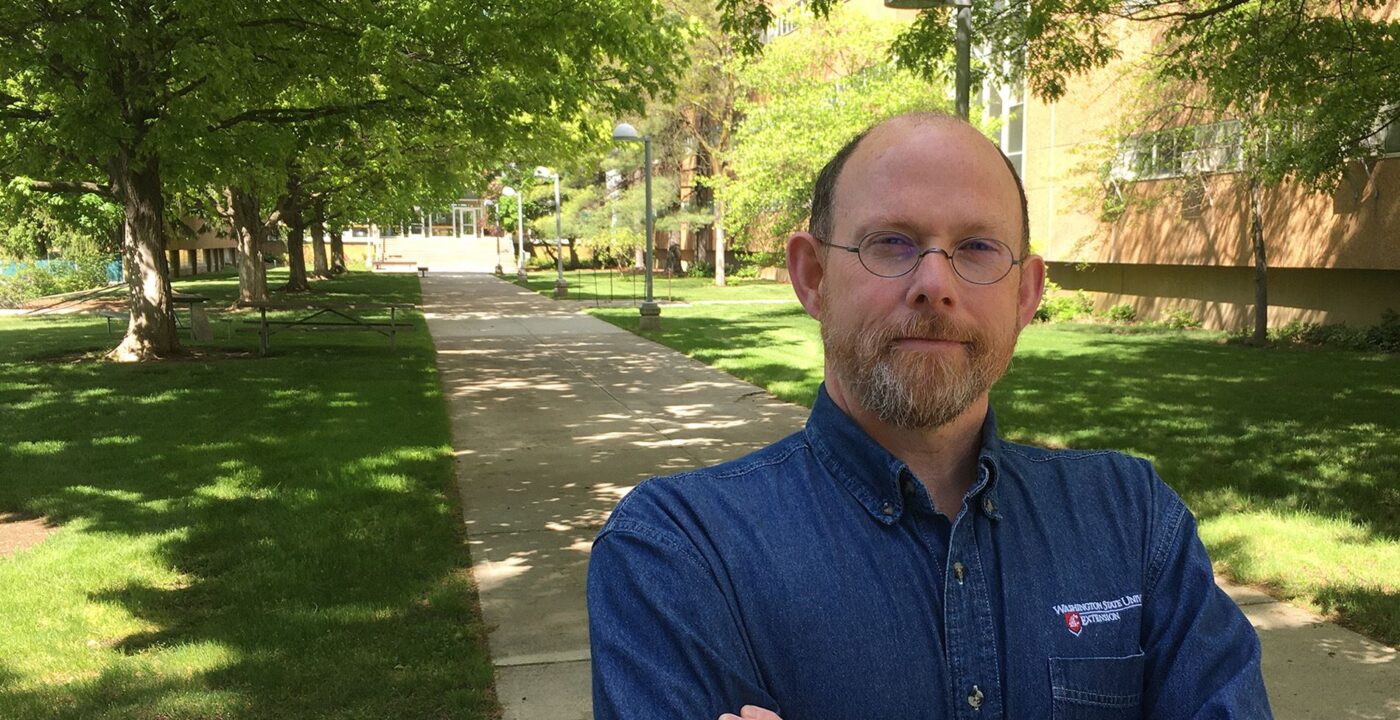
Around Halloween last year, Todd Murray wasn’t feeling well and didn’t know what was wrong.
Murray, 55, says he didn’t have any particular symptoms that were bothering him — it was just a general feeling of being unwell.
“I couldn’t put my finger on it,” he adds. “I just could tell something wasn’t right.”
His family practice doctor did some blood work and found his bilirubin counts were high. He then had an endoscopic ultrasound and a biopsy of his pancreas.
“After the procedure, the surgeon said it looked like pancreatic cancer,” Murray says.
Pathology results from the biopsy confirmed the diagnosis a few days later.
He met with MultiCare Cancer Institute medical oncologist Sunil Rangarajan, MD (“Dr. R”), and surgeon Alex Cantafio, MD, to come up with a plan.
“Dr. Cantafio and Dr. R are amazing doctors,” Murray says. “When I met them, I thought, ‘These are my guys.’”

Murray visits sheep on a long-term soil research plot at WSU’s Puyallup Research and Extension Center
Things moved quickly from there, and Murray was scheduled for surgery in mid-November to remove the cancerous tumor from his pancreas.
The specific surgery he underwent is called the Whipple procedure, where the head of the pancreas, the first part of the small intestine, the gallbladder and the bile duct are removed.
“I was the perfect candidate for a Whipple because the cancer hadn’t metastasized,” Murray adds.
His surgery was the first robotic Whipple procedure performed in the South Sound region.
“From what I understand, the robotic Whipple is less invasive and you heal a lot quicker,” Murray says. “I was up walking around the next day.”
In addition to faster healing, robotic-assisted surgery also translates to shorter hospital stays, less pain and less discomfort.
“Instead of an incision that stretches across the abdomen, there are just several small incisions,” Dr. Cantafio explains. “It’s a massive difference in surgical site size.”
“I feel very fortunate mine was caught early. I’m really appreciative that MultiCare had the robot and had recruited Dr. Cantafio. My luck, my timing, has been mind-blowing.”
No cancer was found in Murray’s lymph nodes, and there was no evidence of cancer in the nerves or small blood vessels.
“Pancreatic adenocarcinoma is typically a very devastating, aggressive cancer,” says Dr. Cantafio. “But because Todd’s was in an early stage and he’s a young, healthy man, he’s in the best scenario for long-term survival.”
Murray, whose father passed away from pancreatic cancer a few years ago, underwent genetic testing. It revealed he has a genetic mutation linked to pancreatic cancer and melanoma.
He spoke to his sisters following those results.
“We went through our family tree and, in addition to our father, we could identify quite a few others on our dad’s side who had pancreatic cancer or melanoma. My mother’s mother also had pancreatic cancer,” Murray says. “Dr. R advised that my sisters should do genetic testing and get screened to make sure they aren’t going to have the same cards I had been dealt.”
Murray is currently undergoing a six-month cycle of chemotherapy.
“Because mine is genetic, they are treating it pretty aggressively,” he explains.
Murray, who’s the director of the Washington State University Puyallup Research and Extension Center, loves his job and also enjoys refinishing furniture and hiking in his spare time. He looks forward to getting back to his work and hobbies once treatment is complete.
“The hard thing about diagnosis for me was that I know what pancreatic cancer means because my dad had it, and I feel very fortunate mine was caught early,” he says. “I’m really appreciative that MultiCare had the robot and had recruited Dr. Cantafio. My luck, my timing, has been mind-blowing.”
What's next
- Find expert care and support at MultiCare Cancer Institute
- How to support someone with cancer
- Should you consider genetic testing for cancer?