NAMI Washington puts community back into mental health
At a glance
- NAMI Washington aims to make mental health care accessible and stigma-free
- Culturally sensitive, peer-led programs help rural and immigrant communities overcome barriers
- Through local-based affiliates, NAMI Washington is expanding access statewide
If you broke a bone, you’d seek medical care.
Finding mental health care should be no different, says Summer Starr, interim executive director for the National Alliance on Mental Illness (NAMI) Washington.
Starr and her team are on a mission to spread that mindset across the state by reducing the stigma of asking for help and making resources easier to access.
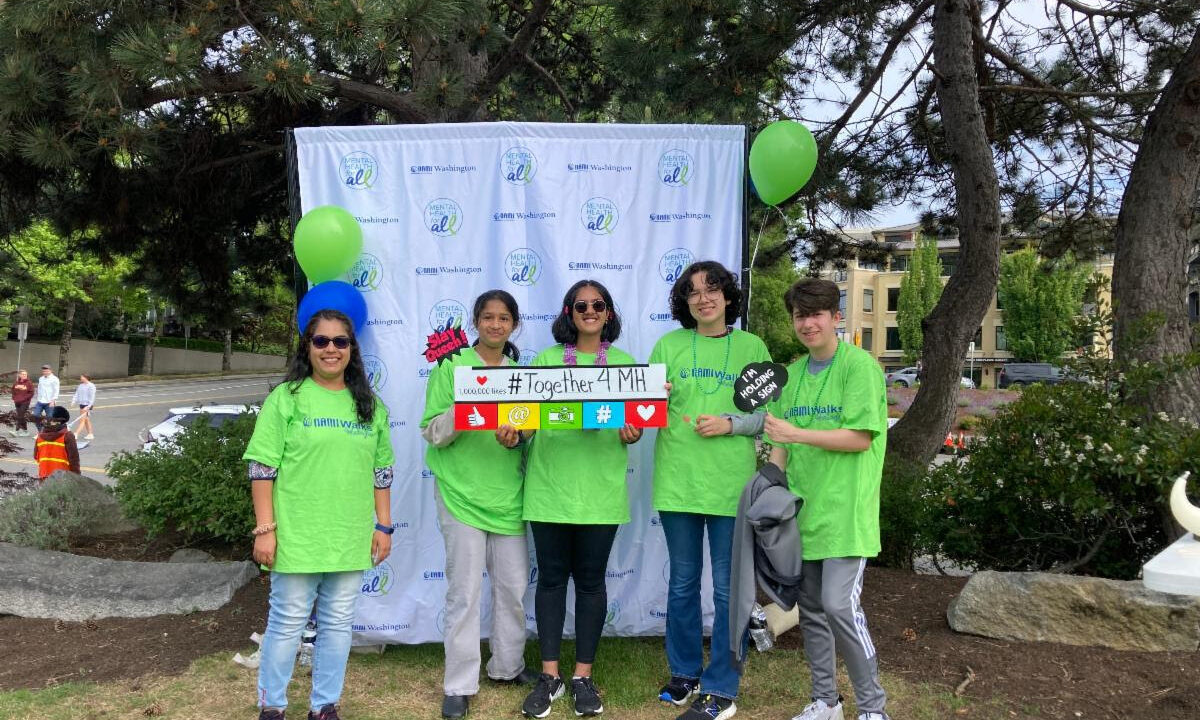
NAMI Washington is the state office of the nation’s largest grassroots mental health organization. It’s dedicated to building better lives for those affected by mental health conditions through community-based outreach and partnership.
The nonprofit recently expanded to provide outreach and support to underserved communities in rural areas and with language and cultural barriers.
“We’re trying to recognize that different communities have different perspectives and needs around mental health,” Starr explains. “In a lot of these communities, mental health is not a common topic, which can reemphasize that feeling of being isolated and alone … our outreach is to help them realize that they’re not.”
A peer-led approach
NAMI Washington was founded in 1979 by a small group of families gathered around a kitchen table who wanted to support loved ones facing severe mental health challenges, Starr says.
They follow the same approach today.
“We consider ourselves peer led. So, whether we’re someone with lived experiences or have supported a loved one, we can talk about those times,” Starr explains. “And that’s a big component of who we are, so that other people can see what they resonate with and can put a face to people who have also struggled.”
Based in Seattle, NAMI Washington partners with affiliates across the state who have been trained to operate support groups and classes and connect people with other local resources.
That includes Alondra Torres, NAMI Washington community mobilizer.
“I grew up in a rural, Spanish speaking community … I was able to create this role from scratch, kind of, bringing in my own personal experiences and hearing from my network of what people were seeing and experiencing,” says Torres. “My parents are immigrants from Mexico, and I think of them in all parts of this work. It gives me that drive to improve things for other families like mine.”
Stuck in survival mode
Oftentimes, immigrant families get stuck in survival mode, just meeting the basic needs of their families for so long that things like mental health get pushed aside, Torres explains.
“A lot of immigrants are keeping themselves in those survival places. But we don’t want to just settle for survival, we want to thrive,” she says. “Mental health isn’t always clinical, it can be other forms of taking care of ourselves … the food, holidays, dancing and culture.”
When people are buried in work and focused on building a stable future in a new place, they’re likely to lose a sense of community and belonging, Torres says. NAMI Washington’s peer-focused groups help establish a community for them.
Torres supports two outreach programs: Mi Mente Mi Fuerza (My Mind My Strength), which primarily focuses on supporting youth, and Compartiendo Esperanza (Sharing Hope), which aims to spark community conversations about stigma and bring those ideas home.
As someone who understands some of the nuances of the families she works with, Torres says she can often easily connect and work with them. But every person, family and community is different, she adds, and you have to be willing to listen and learn.
Working past the stigma
NAMI Washington is developing new affiliations to better understand and reach rural areas, especially farming communities, Starr explains.
Rural Washington farmers face unique challenges like nonstop schedules, fluctuating markets, extreme weather and limited access to mental health care, she says. Agricultural workers are three-and-a-half times more likely to die by suicide than the general public, according to the National Rural Health Association.
“A lot of immigrants are keeping themselves in those survival places. But we don’t want to just settle for survival, we want to thrive.”
“We’re not experts in rural mental health … but we work with others who are, and have been in contact with Washington State University extension offices that are actively working on addressing farmer suicide and mental health for a long time,” Starr says. “We want to uplift their work that’s being done and let people know about our groups and classes.”
While some specialized resources exist, like the Farmer Suicide Hotline, sometimes people need more resources but are hesitant to seek help locally, she adds.
“We’re hearing a lot that people don’t necessarily want to join a local support group because they want anonymity. That’s why we have online options,” Starr explains. “There are ways to get support that isn’t necessarily going to get around town like gossip.”
In Torres’ support groups, she often finds success by letting participants guide the conversation themselves, which helps them discover why they have negative perceptions about mental health.
“We’re calling out the elephant in the room,” she says. “Maybe it’s ‘I look at it this way because my parents said it was this way.’ But how does that help you now, and do you want to raise your families that way?”
These ideas and conversations can be especially hard to address in the Latino community, Torres explains, where families are often taught to be independent and are reinforcing cultural stigmas without realizing. She often hears from children of immigrant families that they feel stuck between two worlds.
“They say, ‘I want my parents to connect with me. I always have to translate and carry the baton for the family, but I need (their) support, too,'” Torres says. “It was very powerful to hear all this from youth, and it opens up the minds of parents a lot to hear these things.”

Just as rural communities face unique challenges, so do the Latino populations that Torres works with, including the cost of care/insurance coverage, immigration status, internet access, and language and cultural competency.
NAMI Washington aims to keep its support as low-barrier as possible. All groups and classes are free, do not have eligibility requirements and maintain participants’ privacy as much as possible.
Growing to meet community needs
“The main thing I want people to know is if they are going through a hard time, it’s not their fault. There is help,” Torres says. “At the end of the day, the resources may not be as accessible as we want, but we can change that and build that as a community.”
NAMI Washington reaches about 30,000 people each year, but Starr knows there’s many more in need.
“At the state level, we train people who want to offer programming, and we’re always looking for program leaders,” she says. “Some of those smaller affiliates, their program leaders are critical to getting programs out there for people,” she says.”
Starr encourages local community leaders, health care providers and others who routinely interact with people in crisis to know who their local NAMI affiliate is.
This work will involve everyone, Torres adds.
“I say, if you want to get there fast, go alone,” she says. “If you want to go far, go together.”
“Partnering for healing and a healthy future” is MultiCare’s mission, and it inspires us to form connections that help improve the quality of life for our communities. Community organizations all around us are doing amazing work, and we’re inspired and excited to support that work.
Stories from our Community is an ongoing series conceived to dive into some of these organizations*, bring their stories to life and spread the word about how they are making our communities better.
*Some of the organizations profiled in this series are recipients of MultiCare’s Community Partnership Fund, which awards funds to nonprofit organizations working on initiatives, programs and projects that improve our community.
What's next
- Explore how NAMI Washington is there for you
- Find support for all your behavioral health needs with MultiCare
- Learn more about all that our community partners do for you