Ocean Shores man benefits from advances in lung cancer care
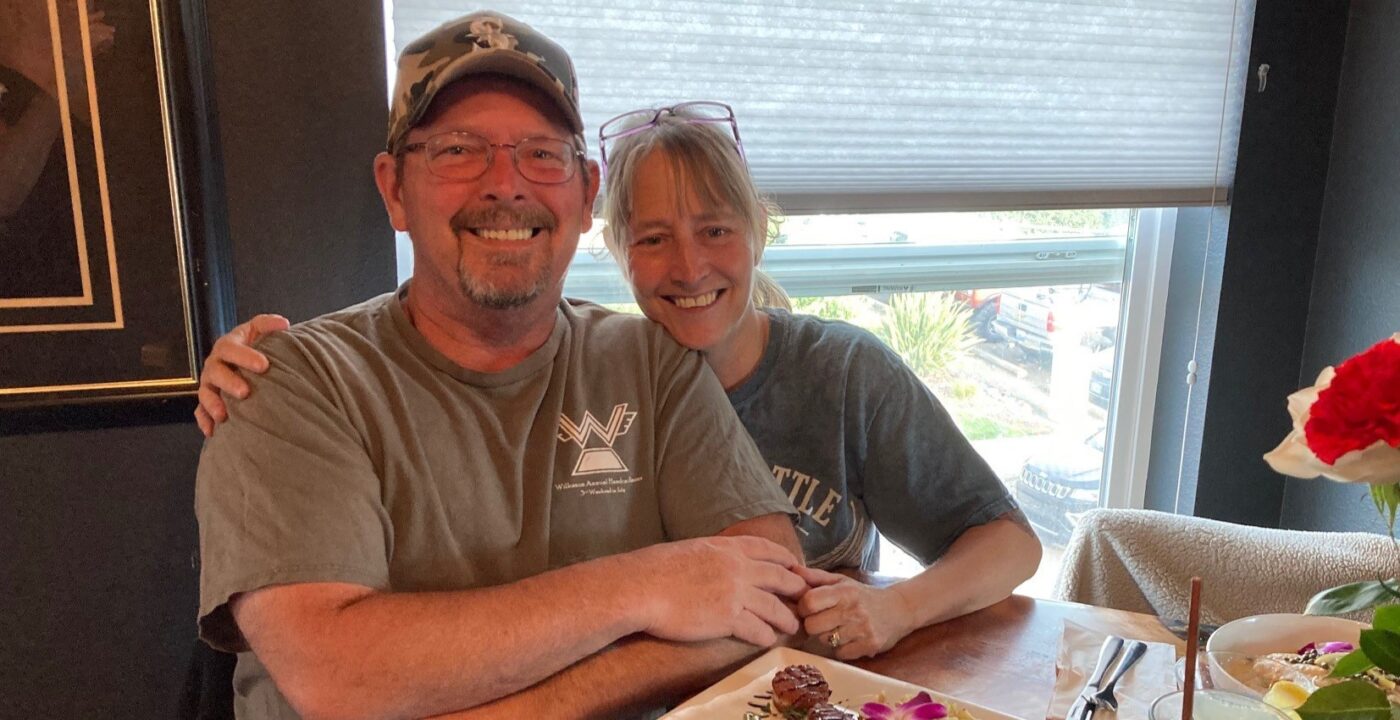
Dan Larson, 67, of Ocean Shores, started smoking when he joined the Army. He smoked a pack a day for about 45 years.
Because of his smoking history, Larson began getting an annual low-dose CT scan to screen for lung cancer about 10 years ago.
A shadowy area in his left lung was detected in one of his scans, which his doctors monitored for several years.
While the area of concern hadn’t increased in size, MultiCare interventional pulmonologist Abhishek Biswas, MD, noticed it had changed shape in 2023.
“Low-dose CT scan is very safe and lifesaving. If you’re a smoker, ask your provider about this screening.”
Dr. Biswas recommended Larson for a minimally invasive bronchoscopy with the assistance of the Ion robot to biopsy the spot. The biopsy revealed stage 3a non-small cell lung cancer, and a follow-up PET scan showed cancer cells had migrated to the lymph nodes around Larson’s heart.
While his cancer wasn’t hereditary, Larson’s father — who also smoked — passed away from the same type of lung cancer.
“He stopped smoking when I was 10, so he hadn’t smoked for almost 50 years when he was diagnosed,” Larson recalls. “My wife Cindy and I took care of him through the end of his life.”
Immunotherapy is changing lives
MultiCare Cancer Institute medical oncologist Nehal Masood, MD, developed Larson’s treatment plan — eight weeks of targeted radiation (overseen by MultiCare Cancer Institute radiation oncologist Gyujae Choi, MD), which included chemotherapy at the beginning of each week, followed by immunotherapy.
Immunotherapy is a treatment that helps bolster the immune system to fight cancer. Like chemotherapy, it’s given intravenously.
“Immunotherapy is a newer model of cancer treatment that’s changing lives,” Dr. Masood says. “It’s enabling patients to live longer and improve their quality of life.”
The plan was for Larson to be on immunotherapy for two years. After one year, however, his insurance company would no longer cover the therapy.
Dr. Masood ordered a PET scan to evaluate how effective Larson’s treatment had been and if another year of immunotherapy was needed.
“The majority of his tumor had shrunk, but there was a small amount of cancer still there,” Dr. Masood explains. “I sent Dan to Dr. K (MultiCare cardiothoracic surgeon Baiya Krishnadasan, MD) to remove what cancer remained.”
Technological advancements allow quicker recovery
On New Year’s Eve 2024, Larson’s upper left lung was removed.
“Fortunately, Dr. K was able to remove Dan’s cancer and no further immunotherapy was necessary,” Dr. Masood says. “Many patients aren’t in the right condition to undergo surgery and lose that part of the lung. Dan is in great shape, however, and was able to do so.”
Larson had testicular cancer in the 1980s and says it took him nearly seven months to heal after chemo and surgery. But only three months into his recovery post-lung surgery, he has healed significantly.
“Technology has come a long way since then. Compared to that (testicular cancer) experience, the healing process has been a lot faster,” he says. “Dr. K used the da Vinci 5 machine, so instead of cracking my chest open, he only had to make four small incisions.”
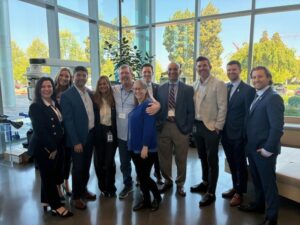
Larson and Cindy at the Intuitive headquarters with Intuitive staff and Drs. Biswas and Krishnadasan
Incidentally, Intuitive, the company that makes the da Vinci 5 robot and the Ion platform, invited Larson to its headquarters in Sunnyvale, California, for their “Day of Impact” event in April this year.
“The Ion is what Dr. Biswas used to biopsy and identify the cancer, and Dr. K used the da Vinci 5 to remove it,” Larson explains. “The purpose of the event was to show the employees of the company what an impact the product they work on has on people like me.”
In remission and back to activities
Dr. Masood says there’s been a dramatic shift with lung cancer treatment due to advancements in screenings and immunotherapy.
“Ten to 15 years ago, patients like Dan would only have lived for a short amount of time,” Dr. Masood says. “Recurrence is much lower than what it used to be, mortality related to lung cancer is coming down and people are living longer with stage 3 disease.”
Because Larson stayed on top of annual screenings, he received effective treatment when cancer was detected.
“Low-dose CT scan is very safe and lifesaving,” Dr. Masood says. “If you’re a smoker, ask your provider about this screening.”
Now in remission, Larson is returning to his active lifestyle.
“We’re avid outdoors people — we like camping and fishing, and we have a Jeep so we are involved in the off-road community,” he shares. “These activities have been sidelined the past few years while I’ve taken care of the cancer, but I’m getting back to them now.”
What's next
- Take our lung cancer risk assessment to see if you should be screened for lung cancer
- Learn more about lung cancer prevention and screening at MultiCare
- Calculate your smoking pack years