Woman’s diabetes and sleep apnea resolve following weight-loss surgery
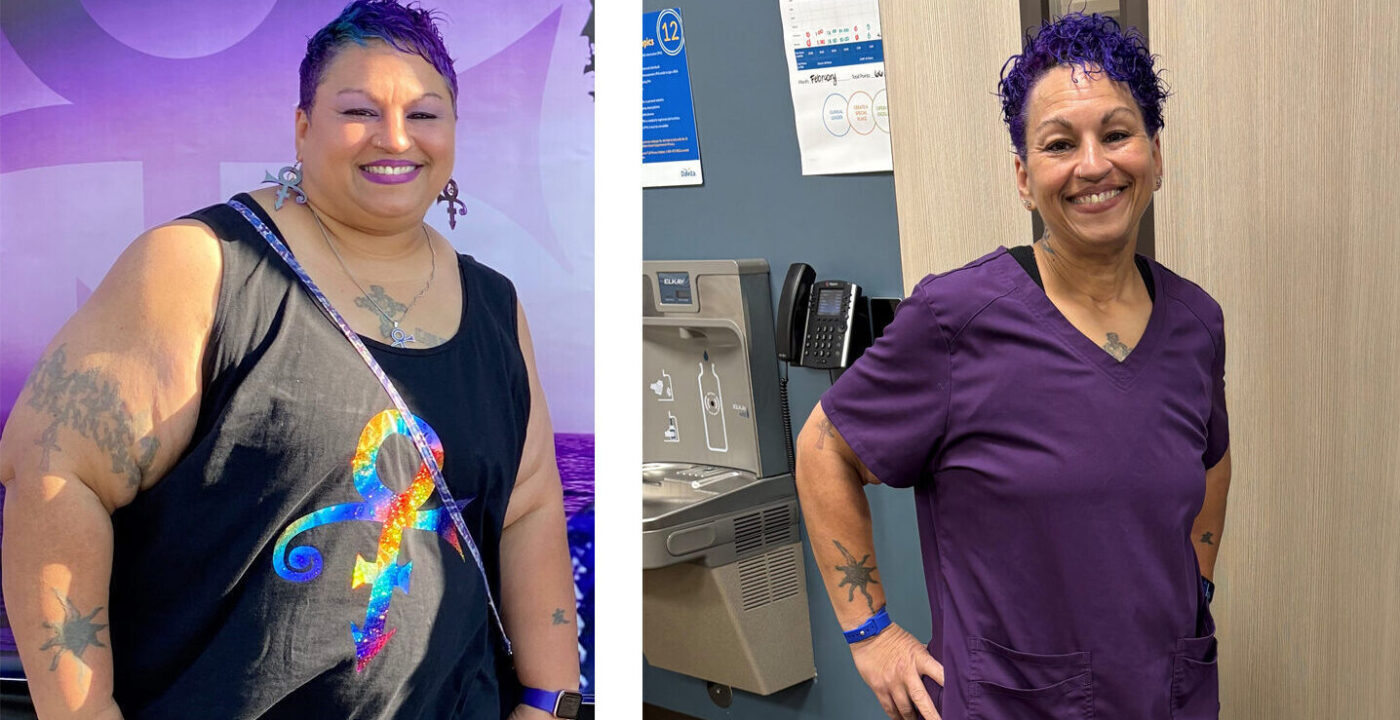
Marceia Dickinson, 53, had been considering weight-loss surgery for some time.
“I was worried I wouldn’t be committed because I love food so much, and I was worried I was too old,” she says. “But one day I thought, ‘I’m done taking all these meds. I have to take control of this.”
Dickinson took Metformin for diabetes and medications for high cholesterol and high blood pressure. She also wore a CPAP for sleep apnea.
She scheduled a consultation with bariatric surgeon Kelly Blair, MD, with MultiCare Center for Weight Loss & Wellness. He recommended gastric bypass.
“First and foremost, my goal was to stop taking all my meds,” Dickinson explains. “I also wanted better health for myself, and I want to be around longer for my kids and grandkids. I said, ‘OK, let’s go for it.”
Making lifestyle changes before surgery
Due to insurance requirements, Dickinson needed to lose 14 pounds prior to weight-loss surgery, but she lost 32 pounds because of the dietary changes she made.
“I looked at what I was eating and drinking and cut out a lot of sugar — the coffee creamer I used had a lot of sugar; I also stopped drinking soda,” she says. “When I went through with these changes, that’s when I knew I was serious about surgery.”
Dickinson’s surgery was in March 2024.
“The first thing I thought when I woke up from surgery was, ‘Wow, I really did it.’ I thought I would have backed out,” she recalls. “I wish I had done it when my mom was alive because I know she would have been really proud of me for taking charge and losing weight. Everyone on her side of the family, including her, was obese.”
Post-surgery health improvements
Immediately following bariatric surgery, Dickinson’s care team told her she no longer needed Metformin, which means her diabetes resolved.
Her sleep apnea also resolved — about a week after surgery, she discontinued use of her CPAP. A month later, she stopped taking the blood pressure and cholesterol medications.
“Dr. Blair is amazing — he’s a great cheerleader,” Dickinson says. “He’s so positive; he supports you and cheers you on.”
A little over a year after surgery, however, her weight loss stalled.
“Before I started my weight-loss journey, I was at 282. I was 250 right before surgery,” she says. “I lost about 75 pounds after surgery, but I got stuck for a while and still wanted to make further progress.”
Overcoming a weight-loss plateau
Dr. Blair referred Dickinson to Jeffrey Hooper, DO, a MultiCare medical weight-loss specialist who suggested she temporarily go on Phentermine, a medication that helps suppress appetite and increases the breakdown of stored fat.
“Our surgical patients’ journeys do not end on the day of surgery — rather it’s just the beginning,” Dr. Hooper explains. “Our medical weight-loss providers can play a valuable role in helping patients optimize their weight loss and keep it off for good.”
Dickinson says after surgery she was in the “honeymoon phase,” where she didn’t think about or obsess over food.
“But the further out from surgery I got, the food noise came back,” she adds. “I wanted to stop the food noise, and Phentermine has helped with that. It’s also helping me get to my goal — I’m at 166 now, but I’d like to get to 150.”
Rather than fixating on food, she recognizes its role as fuel and can make healthier choices.
“I’m still working on it,” she says. “But I’m focused on balancing my meals for nutritional value, so I don’t graze and snack throughout the day.”
Rediscovering mobility
Along with improving her relationship with food, the weight loss has allowed Dickinson to walk greater distances.
“I used to be tired all the time, but I got so much energy back from losing weight. I’m able to walk the waterfront with my friends and talk and not have to stop to catch my breath,” she explains. “I don’t have to find a close (parking) spot at the store, and I don’t have to worry about being out of breath after walking up 10 stairs.”
This summer, Dickinson went to Tacoma’s Art on the Ave and Porchfest and walked for hours without getting tired.
“I walked up and down the festivals and had a great time without having to find somewhere to sit to take a break,” she says. “It felt really good to walk, and my back and knees didn’t hurt. I feel like I have my life back.”
What's next
- Is weight-loss surgery right for you? Take the health assessment
- Learn about bariatric surgery at MultiCare
- Attend a free seminar about weight-loss surgery