Expanding primary care in the Inland Northwest
Research shows that access to primary care is critical — it improves patient outcomes across the lifespan, supports health equity and lowers health care costs.
But what if you can’t find a primary care provider, or you have to wait weeks or months for an appointment?
Many people across the state of Washington have faced this situation since the COVID-19 pandemic. There are approximately 116 primary care clinicians* per 100,000 people in Washington, according to a Milbank Memorial Fund study. This number is higher than the national average of 105 primary care clinicians, but it’s still not high enough to meet the level of demand in our communities.
Some areas of the state with high population growth, like Spokane County, feel this acutely. The Health Resources & Services Administration lists Spokane County, among many other counties in Washington, as a health professional shortage area (HPSA) for primary care. HPSAs are federal designations that identify areas of greatest need for particular health care services to direct people and resources to those areas.
To meet the needs of Spokane communities, MultiCare focused on expanding access to primary care — in part by reimagining how we deliver this service.
Pandemic puts more pressure on primary care
Traditionally, one physician or advanced practice provider (APP) — which includes physician assistants and advanced registered nurse practitioners (ARNPs) — provides care for a panel of patients.
However, being solely accountable for meeting all patients’ primary care-related needs can be challenging. A Journal of General Internal Medicine study estimates that if a primary care provider performed all the recommended tasks for a large panel of patients — delivering all necessary care, reviewing labs, completing medical record documentation and responding to patient portal messages — it would take them 26.7 hours every day.
If a primary care physician performed all the recommended tasks for a large panel of patients, it would take them 26.7 hours every day.
The situation became even more challenging during the pandemic. Suddenly, the number of people using secure patient portals, like MyChart, to communicate with their care team skyrocketed. At MultiCare, doctors and APPs respond to approximately 150,000 MyChart messages each month.
“Primary care has long been under-resourced in Washington state and across the nation,” says Sarah d’Hulst, MD, medical director of primary care at MultiCare Rockwood Clinic. “But during the pandemic, we began to see record levels of burnout among primary care providers. Many retired or left the profession.
“We knew we needed to find a more sustainable approach — for their well-being and that of our patients,” she continues.
It takes a team
In 2022, MultiCare Inland Northwest primary care teams launched a team-based primary care model that pairs a physician with an APP, who together take care of a panel of patients.
This approach improves the patient experience by increasing access to appointments and helping ensure timely responses when patients submit questions or request prescription refills through MyChart. And population health metrics reflect these improvements.
For example, in 2024, all Inland Northwest primary care clinics achieved a seven out of seven in the preventive and chronic care index, a metric that the Centers for Medicare & Medicaid Services uses to measure how well providers are managing certain conditions, like diabetes, in patient populations.
The team-based primary care model has also boosted provider retention. In 2024, Inland Northwest primary care teams retained 99 percent of physicians and APPs.
“It’s a win-win-win situation,” Dr. d’Hulst says. “Patients get better quality care. Our providers have a better work-life balance and newer APPs get to benefit from working closely alongside doctors — receiving on-the-job mentoring they might not otherwise get.”
Creating a comprehensive care experience
Going forward, the goal is to integrate other types of professionals into the team-based primary care model, such as social workers, clinical pharmacists, registered nurses and providers who focus on virtual care.
“By bringing all these individuals together into one team,” Dr. d’Hulst says, “we can provide that comprehensive care experience that patients need while also supporting the long-term well-being of our doctors and APPs.”
In addition to changing the way primary care is delivered, MultiCare also expanded access to primary care in the Inland Northwest by opening or expanding multiple clinic locations. In 2024, MultiCare:
- Expanded clinic space at MultiCare Rockwood Clinic – Airway Heights
- Opened MultiCare Rockwood Primary Care – Northwest Spokane
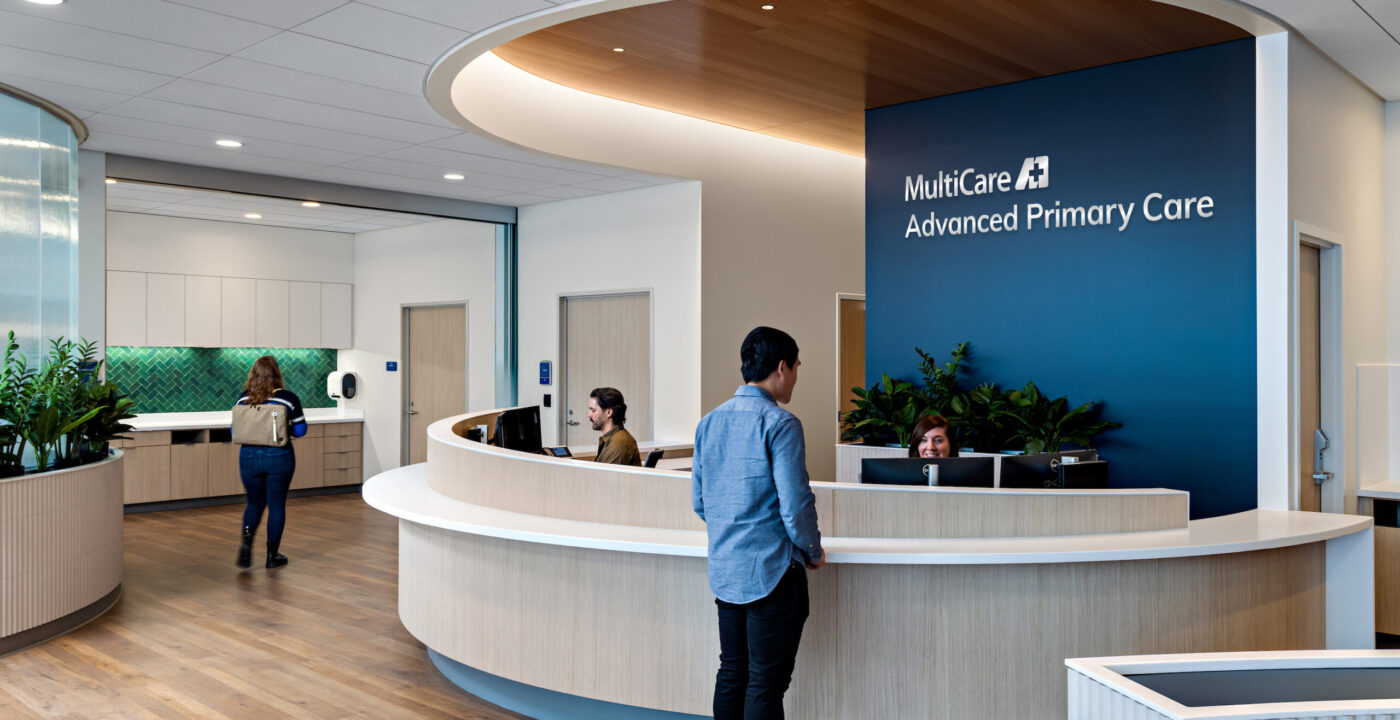
- Opened MultiCare Advanced Primary Care – Spokane Valley, a clinic designed to serve patients with complex medical needs
*This number includes physicians and advanced practice providers, such as physician assistants and advanced registered nurse practitioners.

2024 CEO & President’s Award winner
MultiCare Inland Northwest primary care teams won a 2024 CEO and President’s Award. This annual award series honors excellence and achievement at MultiCare.
What's next
- Visit our Primary Care page to learn more about our services or book an appointment
- Here’s how to get the most out of your doctor’s appointments
- Read our top tips for understanding health information