How an oncology nurse navigated her own breast cancer diagnosis
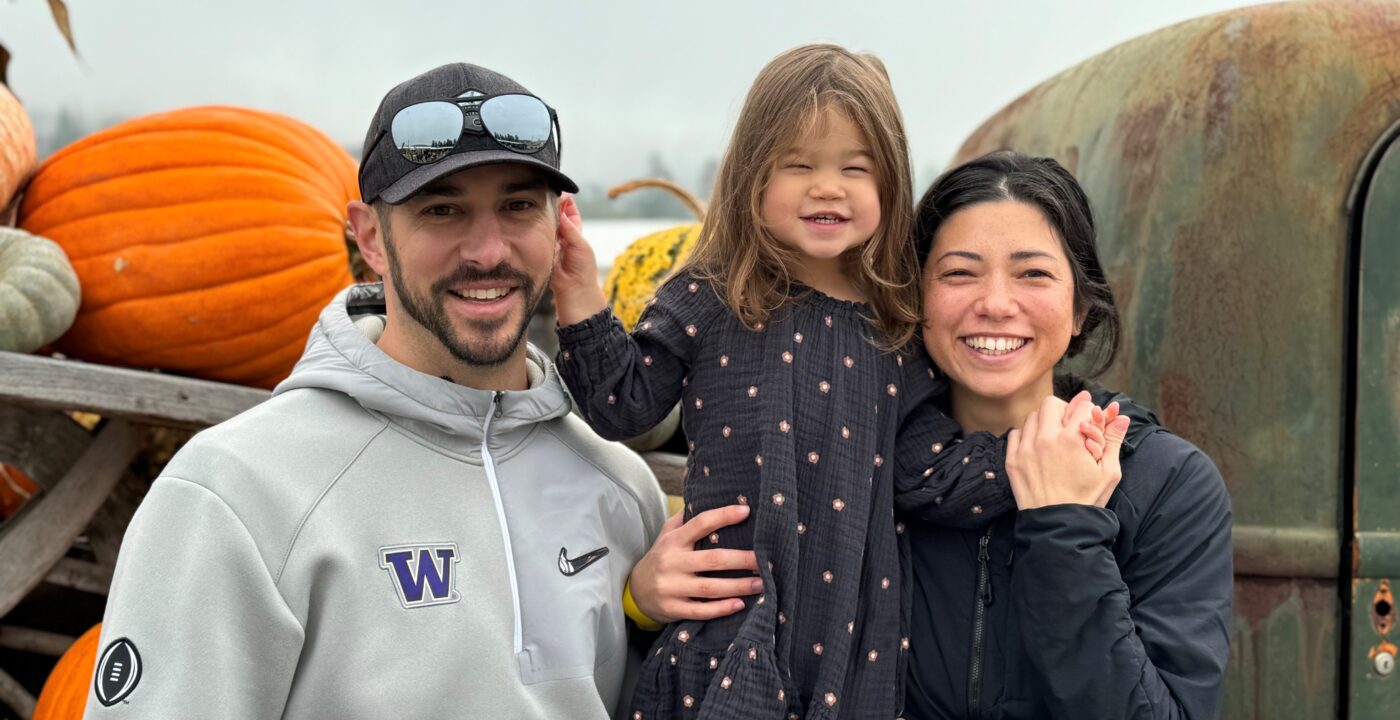
In April 2024, oncology nurse practitioner Karen Gabler, 38, felt a small lump in her left breast as she was changing her clothes.
“I had lots of changes in my breasts with pregnancy and breastfeeding, but they were mostly back to normal, so I thought this was weird,” she says.
She, her husband and her young daughter were about to leave on an international trip, so she figured she’d monitor the lump while they were away. If it was still there when she got back, her plan was to go to primary care, then get imaging.
When she returned home, nothing had changed, so Gabler messaged her primary care provider, Scott Agee, DO.
“I have a really good relationship with Dr. Agee,” she says. “I know how difficult it can be to get established with primary care, so it’s important for me to always have a primary care doctor and a good relationship with them.”
Dr. Agee agreed the next step was imaging.
After a mammogram and ultrasound, the radiologist said Gabler needed a biopsy.
A surprising diagnosis
Within 24 hours of the biopsy, Gabler’s results revealed she had invasive ductal cancer in her left breast. It was estrogen and progesterone positive.
A follow-up PET scan showed the cancer had not spread; it was confined to her left breast.
She discussed her treatment options with oncology breast surgeon Bobby Stevens, DO, and radiation oncologist Christopher Premo, MD, both with MultiCare Cancer Institute – Tacoma General Hospital.
“Dr. Stevens felt pretty confident I could have a lumpectomy,” she explains. “And Dr. Premo said I’d likely need radiation if I went that route, but it would depend on the final pathology of the tumor.”
Gabler, who has no family history of breast cancer, underwent genetic testing and expected the results to be normal.
“It turns out, I’m a carrier of the BRCA2 gene mutation,” she says. “This was a huge surprise to me.”
Both her grandfather and great-grandfather died of prostate cancer and were of Jewish descent.
The genetic counselor explained it’s common that Jewish people from Romania are Ashkenazi Jews, who are more likely to carry the BRCA mutation. People with a BRCA gene mutation have an increased risk of developing cancer at a younger age, according to the National Breast Cancer Foundation.
Genetic link reshapes treatment path
This news altered Gabler’s treatment plan.
“Because being a carrier of BRCA increases my chance of recurrence to 25 percent, I decided I wanted a bilateral mastectomy,” she explains. “Of course, people can choose to do a single-side mastectomy or do the lumpectomy first and a mastectomy if the cancer comes back. There’s no right or wrong decision. But for me, that was the way to go.”
Due to her age, the BRCA mutation and some characteristics of the tumor’s pathology, she would need chemotherapy after surgery, but not radiation.
“I was thinking to myself, ‘I can do surgery and deal with physical pain,’” she explains. “If we could cut it out that’s one thing, but needing chemo made it very real that I have cancer.”
Because she has seen scores of patients undergo chemo, Gabler knew what to expect from it.
“Some are OK; some have a really hard time,” she says. “And I was worried about what every woman worries about: ‘Am I going to lose my hair? Will I be able to function like I did before?’ I had a lot of trepidation.”
When your colleagues are your providers
Gabler had surgery in August 2024, followed by four cycles of chemo that started that October.
“I would say it mostly went by uneventfully, and I never had any major infections, but I did experience some side effects,” she recalls. “After the first round, I had an intense migraine. My appetite was low and I had major taste changes, which made things difficult.”
At the time, Gabler was working in medical oncology at MultiCare Cancer Institute at MultiCare Tacoma General Hospital.
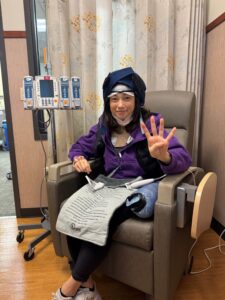 “Because I worked with everyone at Tacoma General, I decided to have chemo at the Gig Harbor location, just to have some separation from those I work with day to day,” she says. “I knew I would be in the best of hands no matter where I went within the Cancer Institute.”
She did, however, have her surgery at Tacoma General, where Gabler’s colleague, Morgan Steele, ARNP, an oncology nurse practitioner in breast surgery, also became her provider.
“When you’re a patient and provider and it’s overlapping, that’s a unique scenario,” Steele says. “These are your colleagues, and some of those relationships bleed into friendships. It’s different to navigate those personal and professional boundaries when it hits so close to home.”
“I can’t say enough good things about Morgan,” Gabler adds. “Her level of professionalism was amazing.”
Managing recovery
Since her tumor was sensitive to estrogen and progesterone, Gabler is also on hormone-suppressing medications.
“I’m in medically induced menopause, as studies have shown that it improves survival and prevents recurrence,” she explains. “The side effects are largely fatigue, hot flashes and joint pain, but they have gotten better over time.”
Gabler recently reached the year mark since her mastectomy, and since then, her treatment journey has involved a lot more than she expected.
“It wasn’t just surgery one day, chemo for three months, then you’re done,” she says. “Between the mastectomy, expanders in and out, the procedure to prep my chest for implants, and then the implant surgery, I have had five surgeries, and every time it set me back. Plus, I go to physical therapy regularly, and I see a cardiologist because chemo and hormone therapy can affect your heart.”
Prioritizing self-care
Since she’s BRCA positive, Gabler will need her ovaries removed around age 40. But rather than letting the thought of another surgery deter her, she is prioritizing self-care.
“I’m a runner and a skier, so it was difficult not being able to do the things I love doing while in treatment and having had so many surgeries,” she says. “But I’m working with a great PT who knows about my goals. I’m hopeful because of the work I’ve put in, I’ll be able to do those things soon.”
She and her husband have already bought their passes for ski season and will do what they can.
“My next phase is preventing cancer recurrence,” she adds. “If you can control anything, it’s eating healthfully and exercising, and those are the things I’m focused on.”
Steele says she was amazed by Gabler’s resilience throughout treatment.
“When you get a cancer diagnosis, especially in your prime years, it’s a little devastating because you’re not expecting it and it’s not what life was supposed to look like,” she adds. “But Karen has handled every step with composure and confidence.”
What's next
- Learn more about breast cancer prevention and screening at MultiCare
- Find expert care and support at MultiCare Cancer Institute
- How to support someone with cancer