Early ovarian cancer diagnosis enables minimally invasive surgery
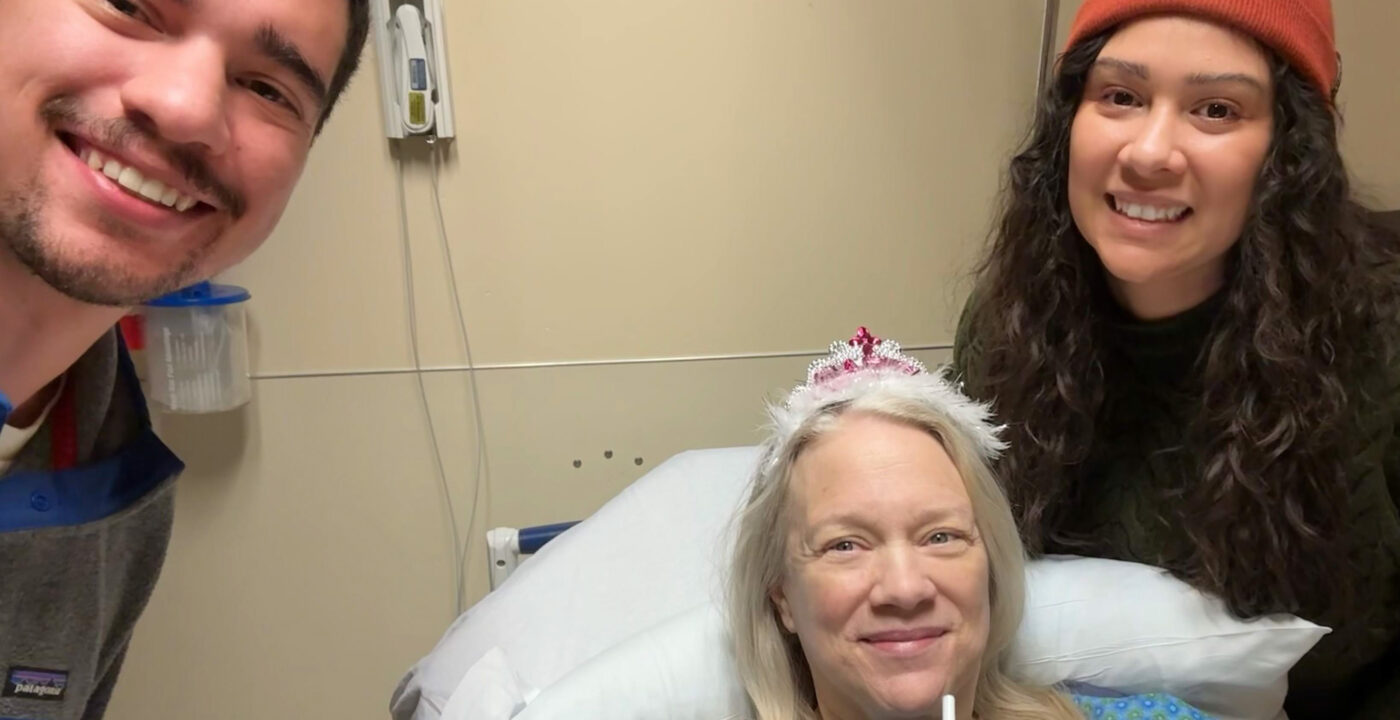
Before turning 60 last summer, Karen Marez noticed abdominal bloating out of nowhere. She was also urinating more frequently than usual.
“I just thought maybe this was part of life as a postmenopausal woman, and kept explaining away my symptoms,” she recalls.
Then Marez started cramping.
“I thought that was really weird,” she says. “It couldn’t be menstrual cramps; I hadn’t had a period since 2012.”
The cramps subsided for a while, then returned with another symptom: spotting.
“That was the big ‘aha moment,’” she says. “Something was wrong.”
When symptoms don’t add up
Both Marez’s mother and great-grandmother had fibroids, so she thought her symptoms might be that and scheduled an appointment with her primary care provider (PCP).
After an ultrasound showed an abnormal endometrial lining and some masses, a follow-up MRI was scheduled to get a closer look.
“My PCP called immediately once the results of the MRI posted to MyChart,” she says. “She agreed with the radiologist who had noted the larger mass could be cancer, and would get me a referral to MultiCare gynecological oncology.”
A fast referral and an expert consult
The next morning, Marez got a call from MultiCare Cancer Institute – Puyallup asking if she could meet with Christopher Breed, MD.
“I was in shock — that appointment was only three business days away,” she recalls. “I said, ‘Of course I can.’”
She says she went on the MultiCare website to learn more about Dr. Breed.
“Reading close to 85 reviews about what an amazing doctor and caring person Dr. Breed is helped ease the weight of this diagnosis a bit, to know I’d be in good hands,” she says.
Marez had an endometrial biopsy at her first appointment with Dr. Breed, and he ordered more imaging, including a CT scan and another MRI. She expected a little spotting from the biopsy, but several days later she had a full-blown period.
“It was pretty clear we were dealing with something serious,” she says. “There was a tiny bit of hope it could be benign, but with the reality that we will deal with it if it’s cancer.”
Dr. Breed told her there was still a chance it was a large benign tumor, but that surgery and the results of pathology would confirm her diagnosis.
Planning for surgery, hoping for the best
Marez was scheduled on New Year’s Eve at MultiCare Good Samaritan Hospital for removal of the tumor, a hysterectomy and possible lymph node removal.
“I had experience with my dad being at Good Sam when he battled non-Hodgkin lymphoma, and I knew how caring the people were at the cancer center,” she adds.
Marez had nicknamed the tumor “Fred” and says she joked with her care team, “We need to evict Fred; he’s an unwanted guest.”
“Before surgery, Dr. Breed told me, ‘We’re going to get Fred out of there,’” she recalls. “He said that with 100 percent conviction, which made me feel really good.”
How early detection changed the surgical approach
Ovarian cancer surgery is traditionally performed with a large vertical incision with a five- to seven-day stay in the hospital and a six- to eight-week recovery. This is because ovarian cancer is typically diagnosed at a later stage and has spread outside the pelvis.
But because of Marez’s early diagnosis, Dr. Breed was able to perform minimally invasive robotic-assisted surgery. That meant only five small incisions, no overnight hospital stay and a two- to three-week recovery.
“The robotic platform allows for enhanced visibility, dexterity and very precise control, which allowed me to see very subtle signs of cancer in Karen’s pelvis that could be removed entirely without need for a bigger incision,” he explains. “This affords the patient a safer surgery and much faster recovery.”
“If you have a gut instinct something is not right, that’s women’s intuition. Listen to that, even if you can explain away some of your symptoms as menopausal.”
Dr. Breed removed the large ovarian mass and did a complete hysterectomy. Cancer had started growing on her right ovary, which was removed, and there was cancer on the peritoneal lining, which was also taken out.
“While this mass did represent a cancer and there were some early signs of spread, thankfully there were no clear signs of spread to the upper abdomen or out of the pelvis,” he adds.
No cancer was found in the lymph nodes, but there was evidence of ascites, a type of fluid buildup that contains malignant cells and was likely the cause of the bloating Marez had experienced.
“That’s why we need to do six rounds of chemo, because of these microscopic cells that are left behind,” she adds.
What the pathology showed — and what came next
When the pathology results came back, Marez’s tumor was classified as high-grade serous carcinoma, which is both aggressive and the most common type of ovarian cancer.
“The data for ovarian cancer are very clear — what predicts overall survival and outcome is that there are no visible signs of disease after surgery,” Dr. Breed says. “We were able to accomplish that for Karen through a much more minimally invasive surgery, allowing her to be able to move quickly onto the next step that’s equally as important: chemotherapy.”
Under the supervision of medical oncologist Anuradha Belur, MD, with MultiCare Cancer Institute – Auburn, Marez began chemotherapy in early February.
”I’m really impressed by Dr. Belur and her staff,” she says. “With both her and Dr. Breed, there’s this respect. They listen to you and check in — ‘How are you today? How do you feel about this?’ I just really appreciate that. I have such a good team on my side.”
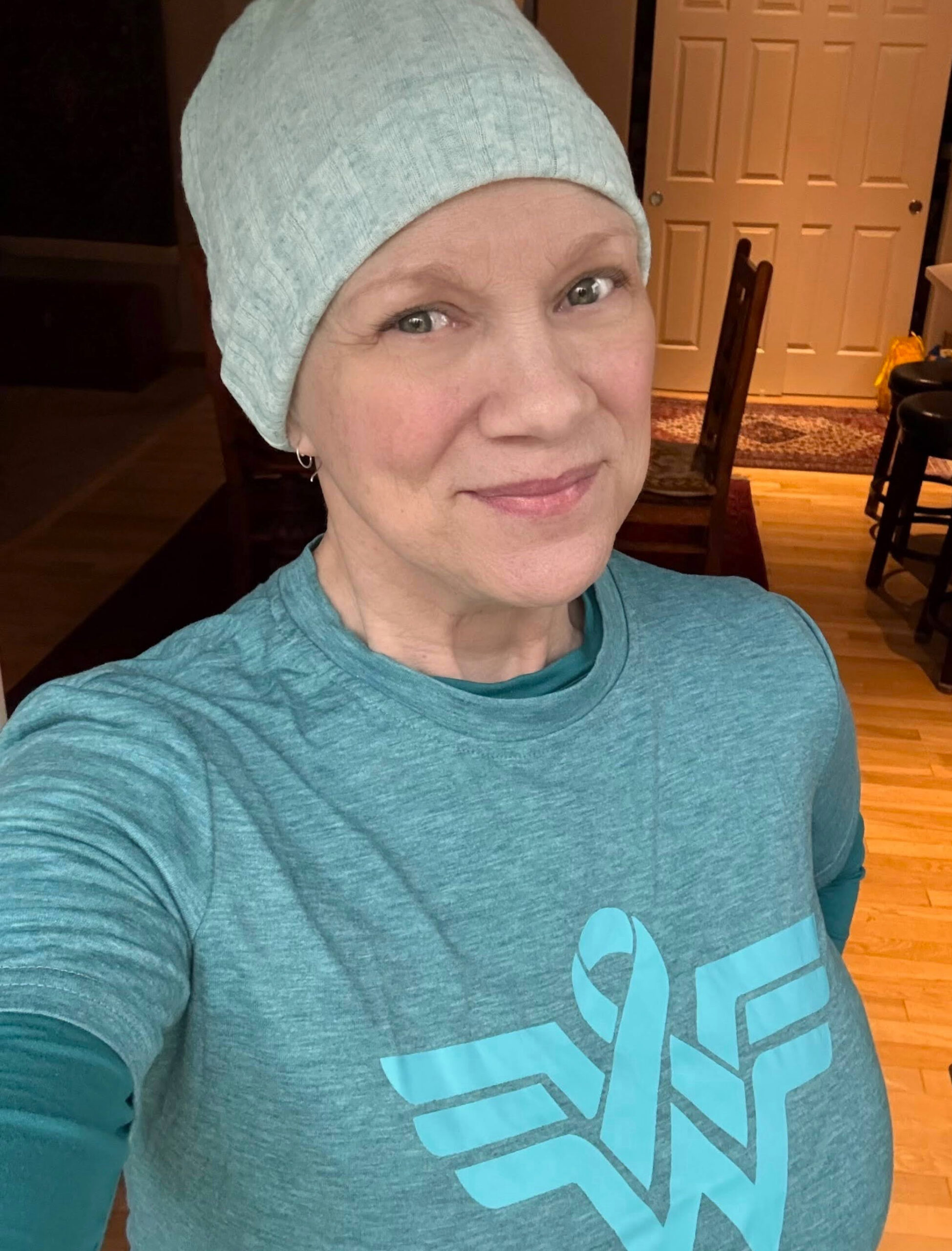
Marez has maintained a positive outlook throughout her treatment for stage 2 ovarian cancer.
While Marez has had some challenges with chemo, including neuropathy, some bone pain and fatigue, she’s maintained a positive attitude and received much support from family, friends and her care team. She says she learned a lot from her dad when he was battling cancer.
“He always had such a positive attitude and approached everything with research,” she says. “He battled the cancer back five times while caring for my mom, who was battling Alzheimer’s. He did it with courage, love, grace and compassion. I use them both as inspiration.”
Dr. Breed also notes Marez’s optimism.
“Karen has had a really positive outlook from the beginning,” he says. “She noticed there was something wrong, came in and got evaluated, and got into the right people quickly.”
Marez’s message to other women: Trust your instincts
Marez feels fortunate the cancer was caught at stage 2, when she started to pay attention to symptoms, and urges other women to do the same.
“If you have a gut instinct something is not right, that’s women’s intuition. Listen to that, even if you can explain away some of your symptoms as menopausal,” she adds. “Get yourself to a doctor, because the majority of ovarian cancer cases don’t get diagnosed till stage 3 or 4, and five-year survivorship odds go down.”
Dr. Breed says there’s a chance of recurrence with Marez’s type of cancer, and that it’s treatable, but it’s not always curable.
“The difference is much like Type 1 diabetes — we don’t cure diabetes; we manage and treat diabetes,” he says. “The goal is to keep a close eye on it.”
Although Marez knows there’s a possibility the cancer could return, she’s committed to fighting it.
“I wake up one strong, brave, determined day at a time,” she says. “I’m so looking forward to ringing that bell at the Cancer Center in celebration of getting through my chemo treatments that have hopefully brought me to NED (no evidence of disease) status. I’m extremely grateful to Dr. Breed and Dr. Belur for their skill and expertise during this chapter of my life. It helps to move forward knowing that they will still be on my team as my chapter of survivorship begins.”
What's next
- Find expert care and support at MultiCare Cancer Institute
- Should you consider genetic testing for cancer?
- How to support someone with cancer