Pulse Heart Institute tackles cardiac sonographer shortage

At a glance
- National sonographer shortages can delay cardiac ultrasounds, risking timely diagnosis and treatment
- Pulse Heart Institute partnered with the Arizona Heart Foundation to launch a cardiac sonography school
- Graduates have filled critical roles at Multicare and Pulse, boosting access to cardiac imaging
When people have heart concerns, an echocardiogram, or cardiac ultrasound, is often the first step in diagnosis and treatment.
This noninvasive test, given by a cardiac sonographer, takes real-time images of the heart to assess its structure and functioning. But across the country, a shortage of cardiac sonographers jeopardizes timely access to this critical diagnostic tool.
To address this workforce gap, Pulse Heart Institute’s Imaging Center of Excellence (COE) launched the satellite School of Cardiac Ultrasound in partnership with the Arizona Heart Foundation (AHF).
“This school represents an outside-the-box solution that improves access to care, addresses hiring challenges and creates a pathway for employees to further their careers,” says Andrew Smith, director of imaging services at Pulse Heart Institute. “It’s one of the most rewarding projects I’ve been part of.”
A growing shortage of sonographers
The demand for qualified sonographers across a variety of specialties, including cardiology, has increased sharply in recent years. While the number of U.S. sonography graduates in rose by 23 percent between 2011-2021, open sonographer positions grew by 36 percent. During the same time frame, the number of ultrasound exams performed nationally surged by 55 percent.
Without timely access to cardiac ultrasound, care may be delayed. These tests are required before patients can undergo cardiac surgery. Care teams also rely on them to detect heart conditions and develop treatment plans. When access lags, patient outcomes and experiences can suffer.
Those already in the sonography field face consequences, too. Shortages can lead to high workloads, exacerbating work-related burnout. More than half of sonographers in a 2024 study experienced moderate to severe burnout.
A significant factor driving the cardiac sonographer shortage both locally and across the nation is a lack of training programs.
“Washington as a whole is very underserved when it comes to cardiac sonography schools, given the size of our population and the number of job vacancies,” Smith says. “There are only a few schools to serve the entire state.”

2025 CEO & President’s Award winner
The Pulse Heart Institute Imaging Center of Excellence won a 2025 CEO & President’s Award. This annual award series honors excellence and achievement at MultiCare.
Meeting a workforce crisis with innovation
MultiCare and Pulse Heart Institute regularly collaborate with organizations to train health care professionals. But working with an out-of-state partner to launch a local medical training program of this kind was unprecedented.
For the Arizona Heart Foundation, it was the first time expanding their program across state lines. It required both organizations to navigate a complex regulatory environment together.
“AHF has the oldest cardiac sonography program in the nation,” Smith says. “They consistently produce top-tier techs, so we’ve been really excited to partner with them.”
The satellite School of Cardiac Ultrasound is a one-year accelerated program. It combines classroom instruction with hands-on experience through rotations in clinics and hospitals. AHF supplies the instructors and curriculum, while Pulse provides access to clinical rotations at sites across Washington — a key advantage for students. As the largest provider of cardiac imaging in the state, Pulse Heart Institute hosts 75 percent of the school’s clinical rotations. Pulse also built out a dedicated teaching space for the school in Auburn, outfitting it with ultrasound machines and other equipment required for the classroom environment.
Other organizations have strengthened the program by donating classroom materials or teaching classes in specific subject areas, such as IV use for contrast agents (solutions that help enhance visibility during medical imaging).
“Many of our vendors and organizational partners have asked how they can contribute,” Smith says. “The development of this school has truly been a collective effort among members of the COE and our external partners.”
“From the start, we wanted this school to provide a true pathway to growth. It not only enriches employees’ lives, but it also strengthens our culture — and patients feel that when they walk in our doors. Growing from within helps support positive patient experiences.”
Enriching lives, strengthening culture
December 2025 marked a major milestone for the School of Cardiac Ultrasound: The first cohort of students graduated, and 75 percent went on to fill critical roles at MultiCare and Pulse Heart Institute.
In addition to enhancing echo access statewide, the school was designed to create
meaningful career development opportunities for MultiCare team members. More than half of the inaugural class consisted of current MultiCare employees.
“From the start, we wanted this school to provide a true pathway to growth,” Smith says. “It not only enriches employees’ lives, but it also strengthens our culture — and patients feel that when they walk in our doors. Growing from within helps support positive patient experiences.”
To help reduce barriers, scholarships for the school and other educational opportunities are available through the Pulse Heart Institute Hearts of Gratitude Scholarship Program.
From medical assistant to cardiac sonographer
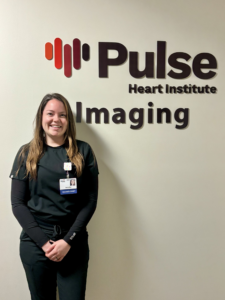
Jennifer Segna, a graduate of the School of Cardiac Ultrasound
Jennifer Segna was one of the satellite school’s first graduates. When she learned about the program, she was a medical assistant at Pulse Heart Institute Cardiology Services – Olympia Ensign Road.
“I had a decade of experience as a medical assistant,” Segna says. “I knew I wanted to advance my career, but wasn’t really sure what the next step was. That’s when this opportunity fell into my lap.”
After six months of classroom instruction and six months of clinical rotations, Segna graduated from the program, passed the credentialing exam and accepted a position as a cardiac sonographer at the Olympia clinic where she had been working.
“I went into the program wondering if this was something I could actually do,” she says. “But I started gaining confidence on day one. Each skill builds on top of the other, and everybody was really supportive.”
Part of what Segna enjoys about her new role is the opportunity to think like a detective.
“Our teachers really encouraged us to approach sonography from an investigative standpoint,” she says. “That means taking the time to consider things like, ‘Why is this patient on my table today? What extra images could I take to help the cardiologist understand what’s happening?’”

Pulse Heart Institute team members instrumental in this project include Michael McDonald (end of second row, left); Holly Euler (front row, third from right); Andrew Smith (front row, second from right); and Sabrina Shaheen, MD (not pictured), among others.
As Segna and her fellow graduates settle into their new roles, Imaging Center of Excellence leaders at Pulse — including Holly Euler, manager of advanced cardiovascular imaging; Sabrina Shaheen, MD, cardiologist; and Smith, imaging services director — are looking for ways to continue expanding the program, such as adding new clinical rotation sites in Yakima and other locations across the Pacific Northwest.
“Working with our partners to build this school has been such a positive experience,” Smith says. “It’s reinforced our commitment to finding innovative ways to improve access to cardiovascular services and sustaining our workforce.”
What's next
- Explore cardiac services at Pulse Heart Institute
- MultiCare teams up with partner organizations to address high blood pressure in Yakima
- Explore more stories about MultiCare programs and partnerships