Labral Tear


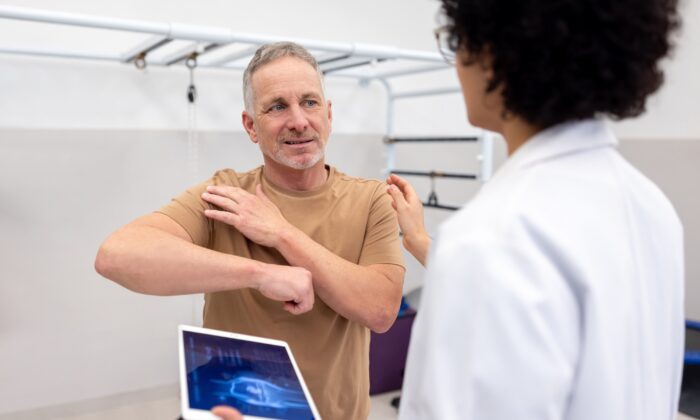
The labrum is a ring of cartilage that lines our shoulder and hip joints. These small but mighty pieces of cartilage serve as cushions and stabilizers — they support smooth movement and help absorb some of the stress we place on our joints when we throw, lift, bend, twist or perform other activities.
A tear in the shoulder labrum, also known as a labral tear, can cause pain and discomfort during routine tasks like lifting a grocery bag or reaching for an item on a shelf. Tears can develop over time due to repetitive motion, or they can happen suddenly because of a traumatic injury like a fall.
Labral tears can affect anyone but are most common among athletes and people who engage in repetitive overhead arm movements as part of their jobs.
The two main types of shoulder labral tears are:
Superior labrum from anterior to posterior (SLAP) tear. Often seen in athletes who throw, this type of tear affects the top of the labrum where the biceps tendon attaches.
Bankart tears. Typically associated with shoulder dislocation, Bankart tear affects the lower front part of the labrum.
Symptoms of labral tears
Labral tears can cause a range of symptoms, which may worsen over time if left untreated. Common symptoms include:
- Persistent shoulder pain — it may be sharp, or dull and achy
- Pain that worsens during movement or overhead activity like throwing
- Clicking, popping or grinding sensations in the shoulder
- Shoulder instability or feelings of “looseness”
- Reduced strength and range of motion
Early evaluation of symptoms can prevent further damage and improve outcomes. Consult a specialist if:
- Shoulder pain persists for more than a few weeks and is interfering with daily life
- Your shoulder “catches,” locks or feels like it slides out of place when you try to move it
- You’re experiencing weakness or loss of function
Diagnosing labral tears
To make a diagnosis, your orthopedic specialist will discuss your medical history and perform a physical exam to assess for pain, determine joint stability and evaluate your range of motion. They may also recommend imaging tests:
- X-rays can help rule out bone-related issues like arthritis or bone spurs.
- MRIs provide detailed images of soft tissues — muscles and tendons — to confirm the tear and its severity. In some cases, a special dye may be injected into the shoulder joint to help your care team visualize the labrum and locate tears.
Treating labral tears
Treatment depends on several factors, including the type and severity of the tear, your activity level and overall health. We offer both nonsurgical and surgical options tailored to your individual needs.
Nonsurgical treatments
Some labral tears can be treated with nonsurgical methods:
- Rest, ice and activity modification to support healing
- Anti-inflammatory medications to ease pain and swelling
- Physical therapy to strengthen surrounding muscles, enhance stability and improve range of motion
- Corticosteroid injections for pain relief
Surgical treatments
You may benefit from surgery if nonsurgical approaches aren’t improving your symptoms or restoring stability. Surgical options include:
- Arthroscopic labral repair, which uses minimally invasive techniques, to reattach the labrum to the shoulder socket
- Labral debridement to remove frayed edges of the labrum in small tears
- Open surgery for large or complex tears
Postoperative rehabilitation can help you further regain strength and mobility. While recovery looks different for everyone, most patients gradually return to the activities they enjoy.