Vaccine Information
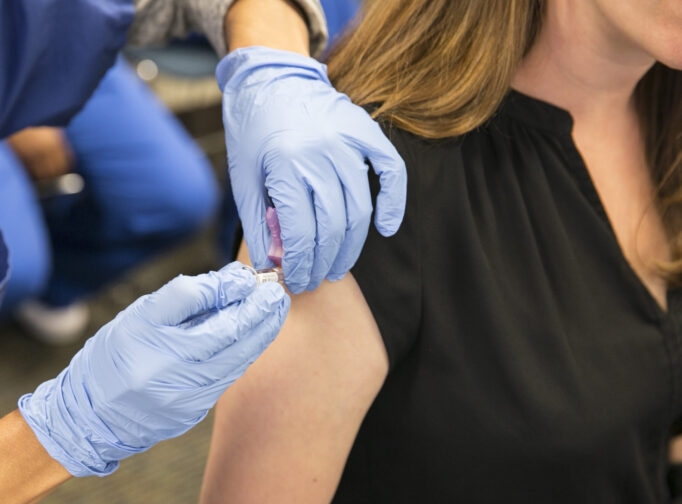
While there are simple ways you can prevent illness, like washing hands and staying away from people who are sick, getting vaccinated is the most effective line of defense against COVID-19 and the flu.
RSV vaccines for older adults and pregnant women, and antibody treatments for infants, are available to prevent vulnerable populations from severe illness.
Flu vaccine
One of the best ways to protect yourself from flu is to get vaccinated. Ideally you should get a flu vaccine before flu viruses begin spreading in the community, since it takes about two weeks after vaccination for antibodies to develop in the body and provide protection against flu. We encourage getting immunized before the end of October in order to be well protected for the typical flu season.
The Washington State Department of Health (DOH) recommends that everyone 6 months of age and older get a flu vaccine every year for two reasons:
- There are many different flu viruses and the viruses are constantly changing, so flu vaccines may be updated from one season to the next to protect against the most recent and most commonly circulating viruses.
- A person’s immune protection from vaccination declines over time, so annual vaccination is needed for optimal protection.It’s especially important that the following groups get vaccinated, either because they are at high risk of having serious flu-related complications or because they live with or care for people at high risk for developing flu-related complications:
-
- Pregnant women
- Children younger than 5, but especially children younger than 2 years old
- People 50 years of age and older
- People of any age with certain chronic medical conditions
- People who live in nursing homes and other long-term care facilities
- People who live with or care for those at high risk for complications from flu, including:
- Health care workers
- Household contacts of persons at high risk for complications from the flu
- Household contacts and out-of-home caregivers of children less than 6 months of age (these children are too young to be vaccinated)
MultiCare offers walk-in appointments for flu shots for both adults and children at a wide range of locations throughout the regions we serve. Call ahead to make sure the location of your choice has shots available.
COVID-19 vaccine
Decision-making around the COVID-19 vaccine is complicated this year, with recent recommended changes by the U.S. Department of Health & Human Services. MultiCare recommends that our patients follow the guidance provided by the Western Health Care Alliance in deciding which vaccines to get this fall.
This guidance is in line with the immunization schedules set and shared by the American Academy of Pediatrics (AAP), the American College of Obstetricians and Gynecologists (ACOG), the American Academy of Family Physicians (AAFP) and the Infectious Disease Society of America (IDSA) for COVID-19, Influenza and RSV vaccines.
The Washington State Department of Health (DOH) has issued a standing order for the COVID-19 vaccine to ensure that all Washington state residents have access to the COVID-19 vaccine. And, recently, America’s Health Insurance Plans (AHIP), a national trade association for U.S. health insurance companies, released a statement that said, in part, “Health plans will continue to cover all ACIP-recommended immunizations that were recommended as of September 1, 2025, including updated formulations of the COVID-19 and influenza vaccines, with no cost-sharing for patients through the end of 2026.”
MultiCare will be providing the COVID-19 vaccine at select MultiCare pharmacies and pediatric clinics but does not yet have them available. To get your COVID-19 vaccine now, you can visit Vaccines.gov to find a vaccine site near you.
RSV vaccine
Respiratory syncytial virus (RSV) doesn’t typically cause serious illness in healthy children and adults. But for older adults and infants under 1 year of age, RSV can develop into more serious respiratory illnesses like pneumonia or bronchiolitis that potentially require hospitalization.
The American Academy of Family Physicians recommends immunizations for people 75 and older who are at increased risk of severe RSV.
To protect babies, the American Academy of Pediatrics (AAP) recommends a vaccine for pregnant women and an RSV antibody treatment for infants.
The maternal vaccine allows antibodies to transfer to babies in utero, giving protection against RSV when the baby is born.
The RSV monoclonal antibody treatment, nirsevimab, is an injection given to babies younger than 8 months born during RSV season. Most of the time, if a mother received an RSV vaccine at least 14 days before delivery, nirsevimab is not necessary. Babies over 8 months old who are not at an increased risk for severe RSV disease should not receive nirsevimab.
RSV vaccines are available by appointment only at MultiCare pharmacies. Call ahead to make sure the location of your choice has shots available.
Flu, COVID-19, RSV: Your guide to fall vaccines
Every fall, we all play an important role in protecting each other from respiratory illnesses such as influenza (flu), COVID-19 and respiratory syncytial virus (RSV).